HVAC systems can harbour and distribute mold throughout an entire building. The air handler's evaporator coil and drain pan are the most common mold sites — condensate from the cooling process creates a continuously wet surface that supports Cladosporium, Penicillium, and in neglected systems, Stachybotrys. When the system runs, mold spores are drawn off these surfaces and distributed through the duct system to every room.
Routine duct cleaning (vacuuming the inside of ductwork) is not HVAC mold remediation. Duct cleaning removes accumulated dust and debris but does not address mold on the coil, drain pan, or inside the air handler itself. HVAC mold remediation requires treating the air handler as a mold-contaminated area, using EPA-registered antifungal agents on all interior surfaces, replacing the filter, and testing air quality after treatment with the system running.
HVAC mold is a particularly serious air quality issue because the system actively distributes spores. Any property with suspected HVAC mold should operate the system minimally until the assessment is complete and the remediation is performed.
Signs you need HVAC mold cleaning
- Musty odour from supply vents when the HVAC system is running
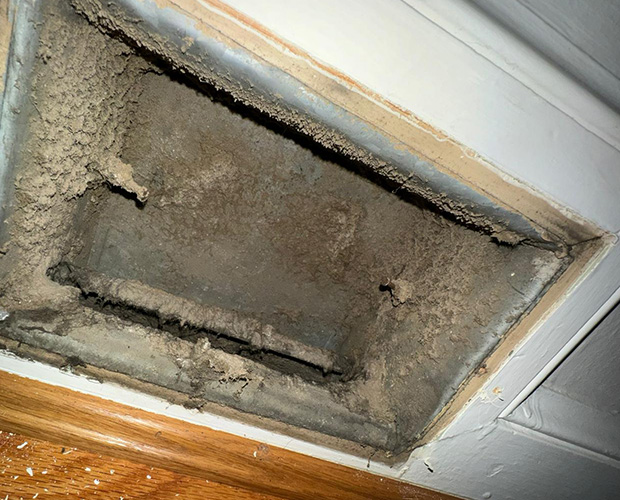
- Visible mold or dark staining inside the supply or return registers
- Elevated mold spore counts in rooms that do not have visible mold on walls or ceilings
- Allergy or respiratory symptoms that worsen when the HVAC is operating
- Visible mold on the evaporator coil or in the air handler cabinet
- Drain pan that is not draining (standing water in the condensate pan)
Why Baltimore properties see this
Baltimore: central air conditioning in older Baltimore rowhouses is often retrofitted into attic or crawl-space air handlers with poorly sealed ductwork — condensate pan overflows and humidity infiltration into the duct system are common.
Miami: HVAC systems in Miami run almost continuously year-round to manage the tropical humidity. The high operational hours mean coil cleaning intervals are shorter and drain pan failures (due to algae growth blocking the condensate drain) are extremely common.
New Jersey: commercial buildings in Newark and Jersey City with older central HVAC systems commonly have deteriorated duct liner (fibreglass duct lining that has absorbed moisture) — a substrate that supports extensive Cladosporium and Aspergillus growth.