HVAC mold cleaning in Paterson: what to know
Paterson's historic mill buildings and surrounding worker housing (late 1800s–early 1900s) have structural configurations — unreinforced masonry, slate roofs, minimal attic ventilation — that make them very vulnerable to mold from roof and plumbing failures.
The Great Falls historic district includes industrial buildings with complex floor plans where mold can spread extensively before detection — thorough assessment of all accessible spaces is essential in these properties.
Mold conditions in Paterson
Common mold types in this area: Cladosporium (masonry and industrial building interiors); Penicillium (historic plaster interiors); Stachybotrys (mill building framing with chronic moisture).
We serve Paterson Great Falls National Historical Park, Lambert Castle, Paterson Museum, Garret Mountain Reservation and the wider Paterson area across ZIP codes 07501, 07502, 07503, 07504, 07505.
Signs you need HVAC mold cleaning
- Musty odour from supply vents when the HVAC system is running
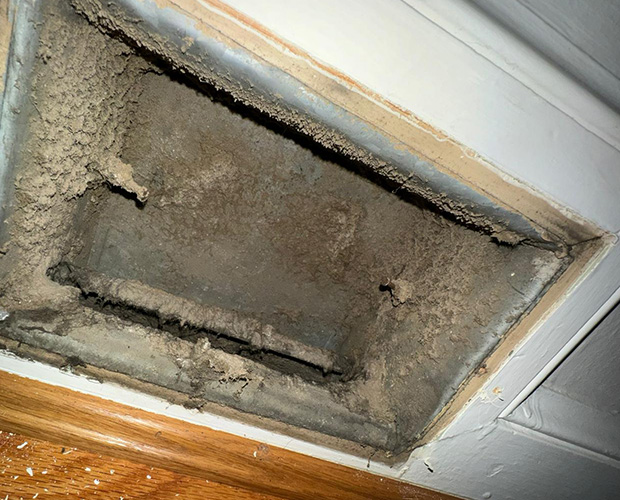
- Visible mold or dark staining inside the supply or return registers
- Elevated mold spore counts in rooms that do not have visible mold on walls or ceilings
- Allergy or respiratory symptoms that worsen when the HVAC is operating
- Visible mold on the evaporator coil or in the air handler cabinet
- Drain pan that is not draining (standing water in the condensate pan)
How we handle HVAC mold cleaning in Paterson
HVAC systems can harbour and distribute mold throughout an entire building. The air handler's evaporator coil and drain pan are the most common mold sites — condensate from the cooling process creates a continuously wet surface that supports Cladosporium, Penicillium, and in neglected systems, Stachybotrys. When the system runs, mold spores are drawn off these surfaces and distributed through the duct system to every room.
Routine duct cleaning (vacuuming the inside of ductwork) is not HVAC mold remediation. Duct cleaning removes accumulated dust and debris but does not address mold on the coil, drain pan, or inside the air handler itself. HVAC mold remediation requires treating the air handler as a mold-contaminated area, using EPA-registered antifungal agents on all interior surfaces, replacing the filter, and testing air quality after treatment with the system running.