HVAC mold cleaning in Chevy Chase: what to know
Chevy Chase's pre-war detached homes — primarily 1920s–1940s colonial and Tudor revival construction — have full basements with original block or brick foundation walls that exhibit moisture infiltration through mortar joints and wall cracks during wet seasons.
The neighbourhood's older plaster-on-wood-lath wall construction retains moisture more aggressively than modern drywall, and plaster that has been penetrated by a slow plumbing leak can support hidden mold for years before symptoms appear.
Chevy Chase has a strong historic preservation community — mold remediation in this neighbourhood requires assessors familiar with historic construction materials to avoid damaging irreplaceable plaster, tile, and wood finishes.
Mold conditions in Chevy Chase
Common mold types in this area: Penicillium (historic plaster walls and ceilings with moisture infiltration); Cladosporium (basement block walls and wood trim); Stachybotrys (basement sill plates with chronic foundation moisture); Chaetomium (water-damaged plaster in older homes with deferred roof maintenance).
We serve Chevy Chase Club, Chevy Chase Lake, Friendship Heights (nearby), Brookside Gardens, Meadowbrook Local Park and the wider Chevy Chase area across ZIP codes 20815.
Signs you need HVAC mold cleaning
- Musty odour from supply vents when the HVAC system is running
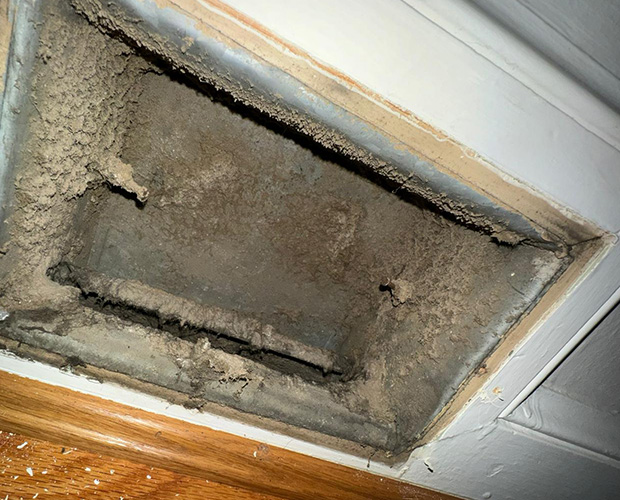
- Visible mold or dark staining inside the supply or return registers
- Elevated mold spore counts in rooms that do not have visible mold on walls or ceilings
- Allergy or respiratory symptoms that worsen when the HVAC is operating
- Visible mold on the evaporator coil or in the air handler cabinet
- Drain pan that is not draining (standing water in the condensate pan)
How we handle HVAC mold cleaning in Chevy Chase
HVAC systems can harbour and distribute mold throughout an entire building. The air handler's evaporator coil and drain pan are the most common mold sites — condensate from the cooling process creates a continuously wet surface that supports Cladosporium, Penicillium, and in neglected systems, Stachybotrys. When the system runs, mold spores are drawn off these surfaces and distributed through the duct system to every room.
Routine duct cleaning (vacuuming the inside of ductwork) is not HVAC mold remediation. Duct cleaning removes accumulated dust and debris but does not address mold on the coil, drain pan, or inside the air handler itself. HVAC mold remediation requires treating the air handler as a mold-contaminated area, using EPA-registered antifungal agents on all interior surfaces, replacing the filter, and testing air quality after treatment with the system running.