Clearance testing in Takoma Park: what to know
Takoma Park's Arts and Crafts bungalows and Victorian homes — many built between 1900 and 1930 — feature original plaster-on-wood-lath interiors, cedar shake or slate roofs, and full basements with unreinforced concrete or brick foundations that commonly allow lateral moisture infiltration.
The city's mature tree canopy keeps ambient humidity elevated year-round and creates root systems that frequently damage foundation drain lines — a combination that drives basement and lower-level mold in the older housing stock.
Takoma Park has an active historic preservation community — mold contractors working here must have experience with original historic materials including lead-based paint coexistence with mold protocols, particularly in pre-1940 properties.
Mold conditions in Takoma Park
Common mold types in this area: Penicillium (plaster ceilings and walls with moisture infiltration from aging roofs); Cladosporium (basement block walls and exterior wood trim); Stachybotrys (basement sill plates and floor joists with chronic moisture); Chaetomium (water-damaged plaster from deferred maintenance).
We serve Takoma Park City Hall, Sligo Creek Trail, Takoma Park Farmers Market, Old Town Takoma and the wider Takoma Park area across ZIP codes 20912.
Signs you need clearance testing
- Remediation has been completed and containment is still in place
- The written protocol specifies clearance testing as a completion requirement
- A real estate transaction requires documented proof of successful remediation
- An insurance claim requires certified clearance documentation
- The remediator has offered to perform their own clearance (this should be declined)
- A previous clearance test failed and re-clearance is required after additional work
How we handle clearance testing in Takoma Park
Clearance testing is the final step of any IICRC S520-compliant mold remediation and the critical quality control measure that confirms the work was done correctly. The clearance test must be performed by an independent licensed mold assessor — the company or individual that performed the remediation cannot perform their own clearance test. This independence is mandated by the NYS 2015 Mold Law and is best practice in all markets.
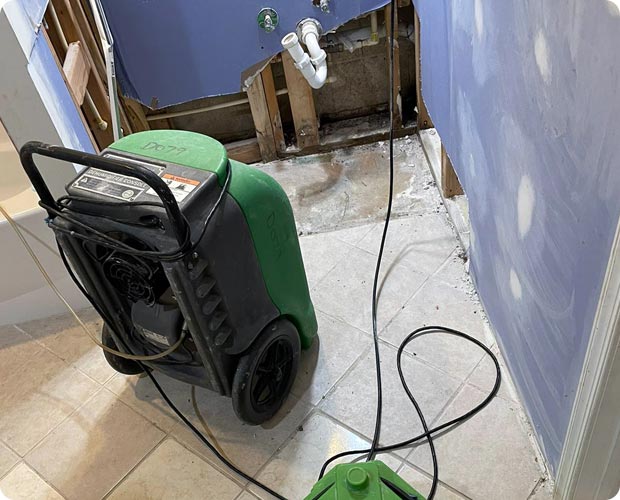
The timing and conditions of clearance testing are specified in the written remediation protocol. Standard protocol requires that containment remains fully in place when samples are collected, that the HEPA-filtered negative air machine has been running for at least 4 hours before sampling, and that an outdoor control sample is collected simultaneously with indoor samples.