Clearance testing in Wheaton: what to know
Wheaton's post-war split-level and Cape Cod housing from the 1950s–1970s has partial basements with block foundations that have developed cracks and efflorescence over decades — lateral groundwater infiltration during wet springs is a primary mold driver.
The area's significant stock of garden apartment buildings (1960s–1980s) has aging flat roofs and HVAC systems that are frequent sources of condensate overflow and mold in top-floor units and common areas.
Wheaton's high-density residential character means mold in multi-family buildings can affect many households before a single complaint triggers action — proactive annual inspection is recommended for building owners.
Mold conditions in Wheaton
Common mold types in this area: Cladosporium (block basement walls and partial basement wood framing); Aspergillus/Penicillium (garden apartment flat-roof membrane failures and HVAC condensate); Stachybotrys (split-level basement framing with chronic groundwater infiltration).
We serve Wheaton Regional Park, Brookside Nature Center, Westfield Wheaton Mall, Wheaton Metro Station and the wider Wheaton area across ZIP codes 20902, 20906.
Signs you need clearance testing
- Remediation has been completed and containment is still in place
- The written protocol specifies clearance testing as a completion requirement
- A real estate transaction requires documented proof of successful remediation
- An insurance claim requires certified clearance documentation
- The remediator has offered to perform their own clearance (this should be declined)
- A previous clearance test failed and re-clearance is required after additional work
How we handle clearance testing in Wheaton
Clearance testing is the final step of any IICRC S520-compliant mold remediation and the critical quality control measure that confirms the work was done correctly. The clearance test must be performed by an independent licensed mold assessor — the company or individual that performed the remediation cannot perform their own clearance test. This independence is mandated by the NYS 2015 Mold Law and is best practice in all markets.
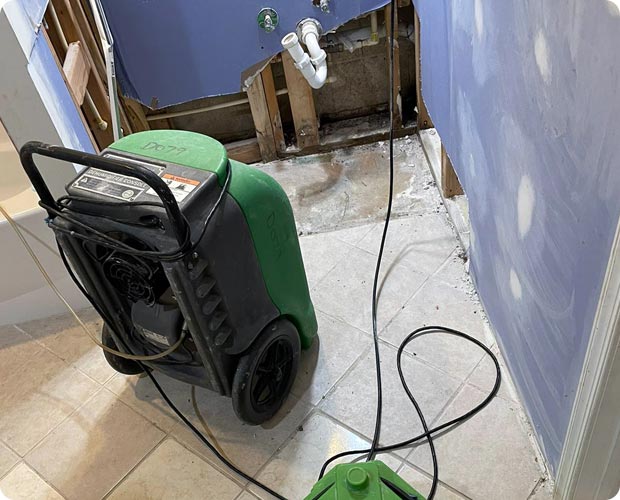
The timing and conditions of clearance testing are specified in the written remediation protocol. Standard protocol requires that containment remains fully in place when samples are collected, that the HEPA-filtered negative air machine has been running for at least 4 hours before sampling, and that an outdoor control sample is collected simultaneously with indoor samples.