Black mold removal in Takoma Park: what to know
Takoma Park's Arts and Crafts bungalows and Victorian homes — many built between 1900 and 1930 — feature original plaster-on-wood-lath interiors, cedar shake or slate roofs, and full basements with unreinforced concrete or brick foundations that commonly allow lateral moisture infiltration.
The city's mature tree canopy keeps ambient humidity elevated year-round and creates root systems that frequently damage foundation drain lines — a combination that drives basement and lower-level mold in the older housing stock.
Takoma Park has an active historic preservation community — mold contractors working here must have experience with original historic materials including lead-based paint coexistence with mold protocols, particularly in pre-1940 properties.
Mold conditions in Takoma Park
Common mold types in this area: Penicillium (plaster ceilings and walls with moisture infiltration from aging roofs); Cladosporium (basement block walls and exterior wood trim); Stachybotrys (basement sill plates and floor joists with chronic moisture); Chaetomium (water-damaged plaster from deferred maintenance).
We serve Takoma Park City Hall, Sligo Creek Trail, Takoma Park Farmers Market, Old Town Takoma and the wider Takoma Park area across ZIP codes 20912.
Signs you need black mold removal
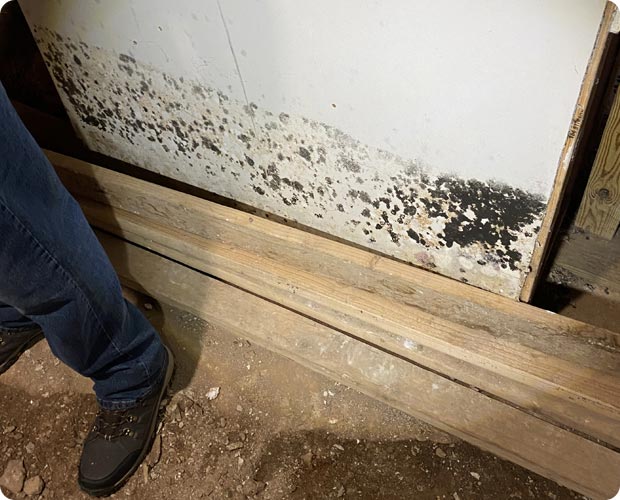
- Dark green, black, or greenish-black colonies on drywall, wood, or ceiling tiles
- Mold with a slimy or wet-looking surface texture (unlike dry, powdery Cladosporium)
- Musty or damp earthy odour in a basement, bathroom, or behind walls
- Mold growth in areas with a history of prolonged water exposure or chronic leaks
- Laboratory results identifying Stachybotrys on air or surface samples
- Health symptoms improving when leaving the property and returning when inside
How we handle black mold removal in Takoma Park
Stachybotrys chartarum — commonly called black mold — is a dark-green to black mold species that grows on cellulose-rich materials (drywall paper, wood, ceiling tiles) that have been wet for an extended period, typically more than 48–72 hours. It is one of the species most associated with toxic mold exposure, though any mold at elevated indoor concentrations poses a health risk.
Because Stachybotrys spores are heavy and sticky, they do not disperse as readily as Cladosporium or Penicillium — which means air sampling alone may miss an active Stachybotrys colony. A licensed mold assessor will collect surface samples (tape-lift or swab) from any dark, slimy, or visually distinctive mold growth and send them to an AIHA laboratory for species confirmation.