Attic mold removal in Coral Gables: what to know
Coral Gables's Spanish Mediterranean Revival mansions and estates from the 1920s–1940s use barrel tile roofs and stucco exteriors over hollow-tile or concrete block — moisture intrusion through failed stucco joints and tile underlayment is the primary mold driver in these historic properties.
The neighbourhood's mature tree canopy keeps surfaces shaded and moist, and fallen organic debris on roofs and in gutters creates micro-environments where mold colonises exterior surfaces and eventually penetrates the envelope.
High-value historic properties in Coral Gables require mold assessors with experience in historic construction to avoid damage to irreplaceable finishes during assessment and remediation.
Mold conditions in Coral Gables
Common mold types in this area: Cladosporium (exterior stucco and roofing substrates); Aspergillus (attic spaces with tropical heat and humidity); Penicillium (interior plaster and stored documents/art in historic homes).
We serve Venetian Pool, Biltmore Hotel, University of Miami, Miracle Mile, City Hall Coral Gables and the wider Coral Gables area across ZIP codes 33134, 33146.
Signs you need attic mold removal
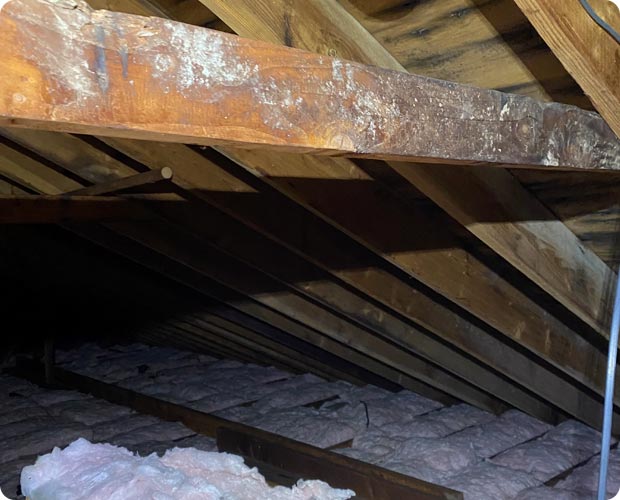
- Dark staining or fuzzy growth on roof sheathing (OSB or plywood) visible from the attic hatch
- Black streaking on rafters from ridge down toward eaves
- Frost or condensation on roof sheathing in winter months (visible in cold climates)
- Bathroom exhaust fans that make noise but do not appear to vent outside
- Musty smell in second-floor rooms or directly below the attic
- Ice dams on the roof in winter in northern markets
How we handle attic mold removal in Coral Gables
Attic mold is almost always a ventilation or exhaust routing problem. The most common causes are: bathroom exhaust fans that terminate in the attic rather than through the roof, kitchen range hoods routed into the attic, ice dams on the roof causing melt water to enter the attic in winter, and ridge/soffit ventilation that is blocked or insufficient. In each case, moisture accumulates on the cold roof sheathing and rafters, producing widespread mold growth — often Cladosporium but also Penicillium and, in wet enough conditions, Stachybotrys.
Attic mold is frequently discovered during a home inspection prior to sale, and it is one of the most common deal-killer items in real estate transactions. It is also one of the more straightforward mold remediations when caught early — the wood surfaces are non-porous enough to be treatable without full replacement in most cases, and access is relatively straightforward.