Black mold removal in Coral Gables: what to know
Coral Gables's Spanish Mediterranean Revival mansions and estates from the 1920s–1940s use barrel tile roofs and stucco exteriors over hollow-tile or concrete block — moisture intrusion through failed stucco joints and tile underlayment is the primary mold driver in these historic properties.
The neighbourhood's mature tree canopy keeps surfaces shaded and moist, and fallen organic debris on roofs and in gutters creates micro-environments where mold colonises exterior surfaces and eventually penetrates the envelope.
High-value historic properties in Coral Gables require mold assessors with experience in historic construction to avoid damage to irreplaceable finishes during assessment and remediation.
Mold conditions in Coral Gables
Common mold types in this area: Cladosporium (exterior stucco and roofing substrates); Aspergillus (attic spaces with tropical heat and humidity); Penicillium (interior plaster and stored documents/art in historic homes).
We serve Venetian Pool, Biltmore Hotel, University of Miami, Miracle Mile, City Hall Coral Gables and the wider Coral Gables area across ZIP codes 33134, 33146.
Signs you need black mold removal
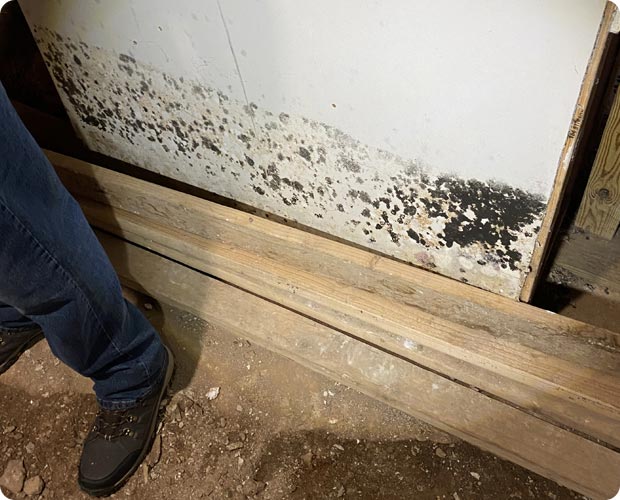
- Dark green, black, or greenish-black colonies on drywall, wood, or ceiling tiles
- Mold with a slimy or wet-looking surface texture (unlike dry, powdery Cladosporium)
- Musty or damp earthy odour in a basement, bathroom, or behind walls
- Mold growth in areas with a history of prolonged water exposure or chronic leaks
- Laboratory results identifying Stachybotrys on air or surface samples
- Health symptoms improving when leaving the property and returning when inside
How we handle black mold removal in Coral Gables
Stachybotrys chartarum — commonly called black mold — is a dark-green to black mold species that grows on cellulose-rich materials (drywall paper, wood, ceiling tiles) that have been wet for an extended period, typically more than 48–72 hours. It is one of the species most associated with toxic mold exposure, though any mold at elevated indoor concentrations poses a health risk.
Because Stachybotrys spores are heavy and sticky, they do not disperse as readily as Cladosporium or Penicillium — which means air sampling alone may miss an active Stachybotrys colony. A licensed mold assessor will collect surface samples (tape-lift or swab) from any dark, slimy, or visually distinctive mold growth and send them to an AIHA laboratory for species confirmation.