Saltar al contenido
Remediación de moho licenciada — llame para agendar
EN
MoldAct logo MoldAct Remediación de Moho Certificada IICRC S520
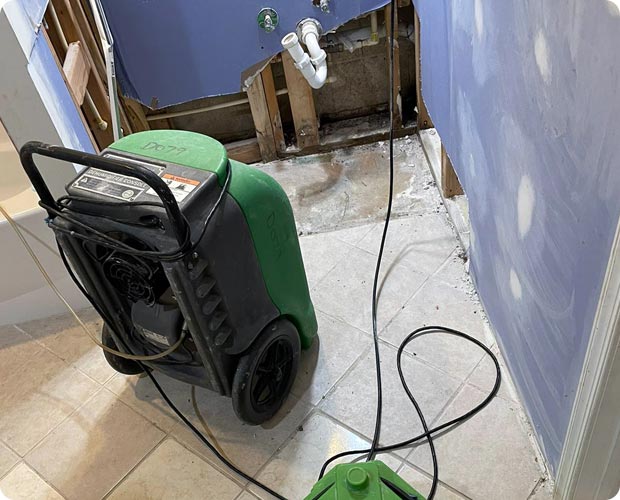
Mold remediation crew completing final work ahead of post-remediation clearance testing

Prueba de Autorización Post-Remediación en Miami

Las pruebas de autorización post-remediación deben ser realizadas por el evaluador independiente — no el remediador — con muestras de aire tomadas 24-72 horas después del trabajo, con contención aún en su lugar y muestra de control exterior simultánea.

Obtenga su Inspección de Moho Gratis

O llame ahora: (877) 660-0430

Clearance testing is the final step of any IICRC S520-compliant mold remediation and the critical quality control measure that confirms the work was done correctly. The clearance test must be performed by an independent licensed mold assessor — the company or individual that performed the remediation cannot perform their own clearance test. This independence is mandated by the NYS 2015 Mold Law and is best practice in all markets.

The timing and conditions of clearance testing are specified in the written remediation protocol. Standard protocol requires that containment remains fully in place when samples are collected, that the HEPA-filtered negative air machine has been running for at least 4 hours before sampling, and that an outdoor control sample is collected simultaneously with indoor samples.

Clearance criteria are met when indoor spore counts in the previously affected area are at or below outdoor background levels (Condition 1) for all species. If results show elevated counts, the remediator must address the deficiency and another clearance test must be performed. All clearance results — pass or fail — should be retained as permanent documentation.

Señales de que necesita prueba de autorización

  • Remediation has been completed and containment is still in place
  • The written protocol specifies clearance testing as a completion requirement
  • A real estate transaction requires documented proof of successful remediation
  • An insurance claim requires certified clearance documentation
  • The remediator has offered to perform their own clearance (this should be declined)
  • A previous clearance test failed and re-clearance is required after additional work

Por qué Miami lo sufre

New York and New Jersey: under the NYS 2015 Mold Law, clearance testing by a separate licensed mold assessor is a legal requirement — the remediator cannot self-certify clearance. This applies to all NYS projects and is strongly recommended for NJ and FL projects.

Baltimore: Maryland does not currently have a state-level mold licensing law equivalent to NYS, but independent clearance testing is considered best practice and is required by many lenders and homeowner insurance carriers when approving remediation claims.

Miami: Florida has mold assessor and mold remediator licensing administered by the Florida Department of Business and Professional Regulation — separate licences are required, reinforcing the independence requirement for clearance testing.

Simple, transparent process

Nuestro Proceso de Prueba de Autorización Post-Remediación

  1. 1

    Protocol review

    The independent assessor reviews the written remediation protocol to understand the scope, clearance criteria, and required sample locations before arriving on site.

  2. 2

    Site verification

    The assessor confirms that containment is intact, the HEPA negative air machine has been running, and the remediation work has been completed as specified in the protocol before any samples are collected.

  3. 3

    Air sample collection

    Air cassette samples are collected simultaneously inside the cleared area and outside the building. The outdoor sample is the control — it establishes the ambient background spore count for comparison. Additional samples may be specified in areas adjacent to the remediated zone.

  4. 4

    Laboratory analysis

    Samples are chain-of-custody shipped to an AIHA-accredited laboratory. Standard turnaround is 24–48 hours; rush service is available when the remediation crew is standing by and reconstruction is time-sensitive.

  5. 5

    Clearance report

    The licensed assessor issues a written clearance report with laboratory results, interpretation, and a pass/fail determination against the protocol clearance criteria. A passing clearance report authorises the remediator to remove containment and authorises reconstruction to begin.

Prueba de Autorización Post-Remediación — Preguntas Frecuentes

Can the mold remediator do their own clearance test?

No — under the NYS 2015 Mold Law, the assessor and remediator must be separately licensed and cannot be the same company. Even in markets without this legal requirement, using the same company for remediation and clearance is a conflict of interest. Independent clearance is the industry standard.

What happens if the clearance test fails?

A failed clearance test means the remediation did not meet the protocol's clearance criteria. The remediator is responsible for additional work (additional HEPA cleaning, material removal, or extended containment) at no additional cost in most contracts. After the additional work, another independent clearance test is performed.

How long does clearance testing take?

The site visit takes 30–60 minutes. Laboratory turnaround is typically 24–48 hours for standard service or same-day/next-day for rush. The full clearance report with written interpretation is issued within 24 hours of receiving lab results.

Is a clearance report required for a home sale?

It is not universally required by law but is typically required by buyers, their lenders, and real estate attorneys in transactions where mold remediation has been performed. A dated, signed clearance report from a licensed independent assessor is the standard documentation.

¿Necesita prueba de autorización en Miami?

Contratistas de remediación de moho certificados IICRC. Llame para agendar.

Llamar Cotización