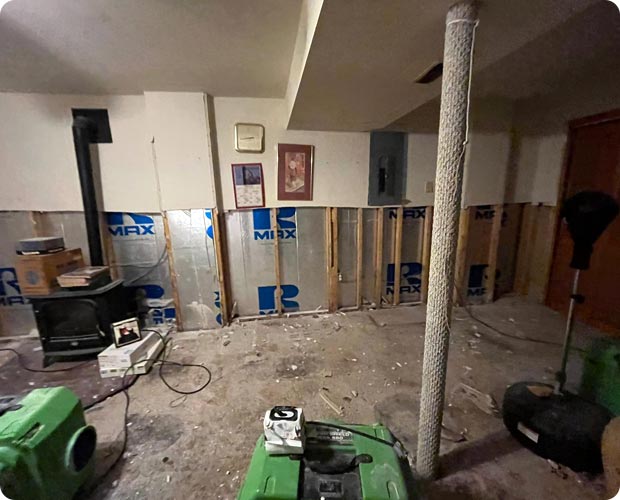
Mold remediation is not mold treatment, mold encapsulation, or surface cleaning — it is the physical removal of mold-contaminated materials following a written protocol prepared by a licensed mold assessor. The IICRC S520 Standard for Professional Mold Remediation defines three condition levels and specifies the response required for each: Condition 1 (normal), Condition 2 (settled spores without active growth), and Condition 3 (actual mold growth requiring full remediation).
Proper remediation starts with the moisture source — if the water intrusion is not corrected, mold will return regardless of how thoroughly affected materials are removed. MoldAct's remediation process begins with moisture source verification and correction before any demolition or material removal begins.
Every MoldAct remediation follows the licensed assessor's written protocol. Work is performed under HEPA-filtered negative air pressure containment to prevent cross-contamination of clean areas. After material removal and structural surface treatment, an independent clearance test (performed by a separate licensed assessor, not MoldAct) confirms the work meets the protocol's clearance criteria before containment is removed.
Señales de que necesita remediación de moho
- Visible mold growth larger than 10 square feet (Level II or III scope)
- Mold in HVAC systems, ductwork, or air handlers
- Mold on structural framing (joists, studs, subfloor) in basement or crawl space
- Black mold (Stachybotrys) confirmed by laboratory testing
- Mold behind walls or under flooring discovered during renovation
- Recurring surface mold that returns within weeks of cleaning
- Musty odour that persists after visible mold is cleaned
Por qué Miami lo sufre
Baltimore's older rowhouses typically have plaster-over-masonry construction where mold grows on the masonry substrate behind plaster — full protocol remediation requires exposing and treating the masonry, not just removing the plaster face.
In New Jersey multi-family buildings, mold remediation often requires coordination with building management and neighbouring units — MoldAct has experience with both single-family and multi-unit NJ remediations.
Miami tropical conditions mean containment integrity is especially important — high ambient humidity can slow structural drying after remediation, requiring extended HEPA operation and extended clearance wait periods.