Moho en ático en South Beach: lo que debe saber
South Beach's Art Deco buildings (1930s–1940s) were built to pre-air-conditioning standards with large windows and cross-ventilation design — modern HVAC retrofits in these buildings often introduce condensate overflow issues in wall cavities not designed for mechanical cooling.
The constant salt air from the Atlantic Ocean and Biscayne Bay accelerates building envelope degradation — window seal failures and exterior wall cracks admit moisture rapidly, creating mold in exterior-facing wall assemblies.
SoBe's very high tourism density and short-term rental activity means mold is often unreported until it reaches an advanced stage — occupants turn over before sustaining health effects, and building managers may not investigate musty odours promptly.
Condiciones de moho en South Beach
Tipos de moho comunes en esta zona: Aspergillus/Penicillium (HVAC systems in Art Deco retrofits); Cladosporium (salt-air-accelerated exterior and interior growth); Stachybotrys (historic buildings with chronic slow leaks); Curvularia (tropical South Florida species).
Señales de que necesita moho en ático
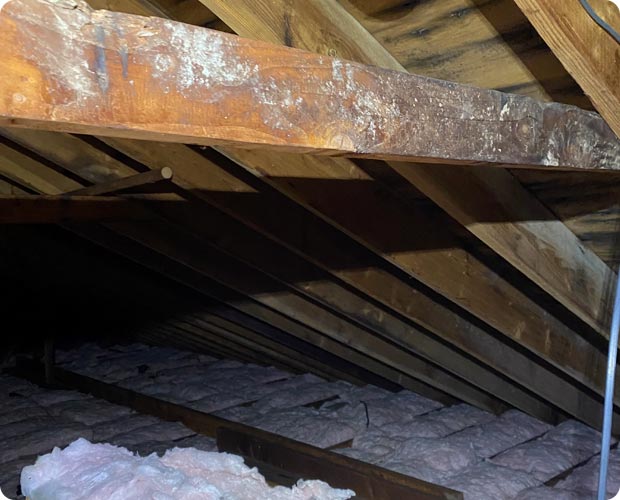
- Dark staining or fuzzy growth on roof sheathing (OSB or plywood) visible from the attic hatch
- Black streaking on rafters from ridge down toward eaves
- Frost or condensation on roof sheathing in winter months (visible in cold climates)
- Bathroom exhaust fans that make noise but do not appear to vent outside
- Musty smell in second-floor rooms or directly below the attic
- Ice dams on the roof in winter in northern markets