Clearance testing in Jersey City: what to know
Jersey City's historic downtown and Heights neighbourhoods have 19th-century brownstones and rowhomes with basement moisture issues comparable to Brooklyn's older building stock — chronic seepage and failing original waterproofing are the norm.
The downtown waterfront was extensively affected by Hurricane Sandy storm surge — condominium towers and low-rise commercial buildings in the Exchange Place and Newport areas sustained significant water damage.
Many Jersey City condominiums from the 1990s–2000s building boom have HVAC systems routed through shared shafts — a single unit's HVAC leak can cause mold in multiple units in the same stack.
Mold conditions in Jersey City
Common mold types in this area: Cladosporium (brownstone basement and cellar); Aspergillus (shared HVAC shafts); Stachybotrys (waterfront properties post-Sandy); Penicillium (older multi-family basement laundry rooms).
We serve Liberty Science Center, Liberty State Park, Grove Street PATH station, The Embankment, Newport Mall and the wider Jersey City area across ZIP codes 07302, 07304, 07305, 07306, 07307, 07310.
Signs you need clearance testing
- Remediation has been completed and containment is still in place
- The written protocol specifies clearance testing as a completion requirement
- A real estate transaction requires documented proof of successful remediation
- An insurance claim requires certified clearance documentation
- The remediator has offered to perform their own clearance (this should be declined)
- A previous clearance test failed and re-clearance is required after additional work
How we handle clearance testing in Jersey City
Clearance testing is the final step of any IICRC S520-compliant mold remediation and the critical quality control measure that confirms the work was done correctly. The clearance test must be performed by an independent licensed mold assessor — the company or individual that performed the remediation cannot perform their own clearance test. This independence is mandated by the NYS 2015 Mold Law and is best practice in all markets.
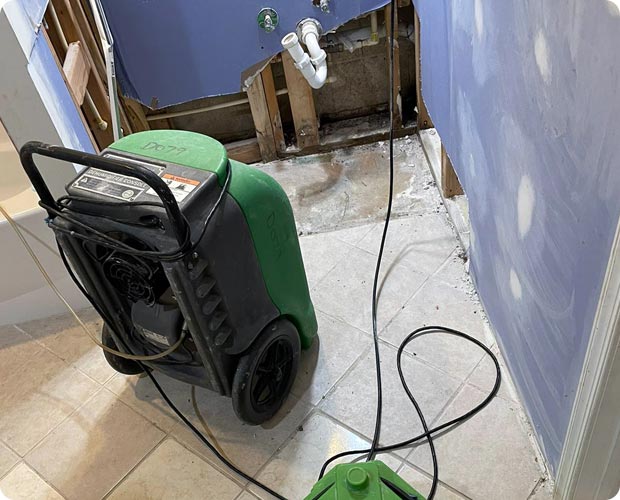
The timing and conditions of clearance testing are specified in the written remediation protocol. Standard protocol requires that containment remains fully in place when samples are collected, that the HEPA-filtered negative air machine has been running for at least 4 hours before sampling, and that an outdoor control sample is collected simultaneously with indoor samples.