Basement mold removal in Jersey City: what to know
Jersey City's historic downtown and Heights neighbourhoods have 19th-century brownstones and rowhomes with basement moisture issues comparable to Brooklyn's older building stock — chronic seepage and failing original waterproofing are the norm.
The downtown waterfront was extensively affected by Hurricane Sandy storm surge — condominium towers and low-rise commercial buildings in the Exchange Place and Newport areas sustained significant water damage.
Many Jersey City condominiums from the 1990s–2000s building boom have HVAC systems routed through shared shafts — a single unit's HVAC leak can cause mold in multiple units in the same stack.
Mold conditions in Jersey City
Common mold types in this area: Cladosporium (brownstone basement and cellar); Aspergillus (shared HVAC shafts); Stachybotrys (waterfront properties post-Sandy); Penicillium (older multi-family basement laundry rooms).
We serve Liberty Science Center, Liberty State Park, Grove Street PATH station, The Embankment, Newport Mall and the wider Jersey City area across ZIP codes 07302, 07304, 07305, 07306, 07307, 07310.
Signs you need basement mold removal
- Visible mold on concrete block walls, wood framing, or stored cardboard
- Musty odour in the basement that worsens in summer
- Efflorescence (white mineral deposits) on concrete walls indicating moisture movement
- Rusting of metal fasteners, pipes, or stored items
- Condensation on cold surfaces during humid weather
- Staining or dark discolouration on wood floor joists above the basement
- Buckling or swelling of basement floor tiles or concrete paint
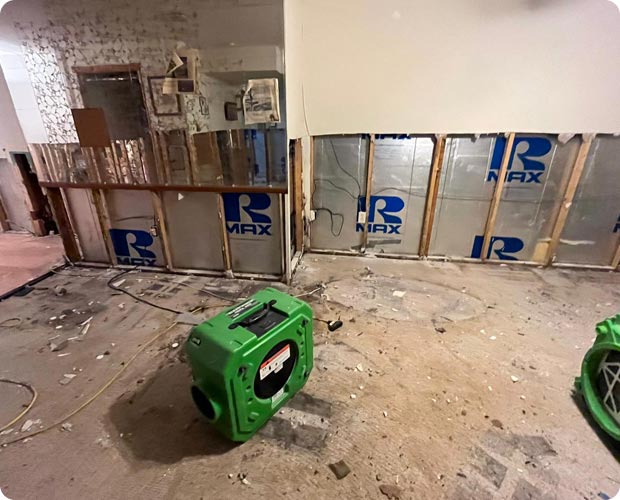
How we handle basement mold removal in Jersey City
Basements are the most common location for mold growth in residential properties across Baltimore, New Jersey, and coastal markets. The combination of below-grade construction, proximity to groundwater, temperature differentials that produce condensation, and limited ventilation creates ideal conditions for mold on wood framing, drywall, insulation, and stored items.
Unlike above-grade mold, basement mold almost always has a chronic moisture source — foundation wall seepage, floor slab moisture, sump pump failure, condensation on cold surfaces, or inadequate waterproofing. Remediating the mold without permanently correcting the moisture source guarantees recurrence, often within one season. The remediation scope must include a moisture correction plan.