Mold remediation in South Beach: what to know
South Beach's Art Deco buildings (1930s–1940s) were built to pre-air-conditioning standards with large windows and cross-ventilation design — modern HVAC retrofits in these buildings often introduce condensate overflow issues in wall cavities not designed for mechanical cooling.
The constant salt air from the Atlantic Ocean and Biscayne Bay accelerates building envelope degradation — window seal failures and exterior wall cracks admit moisture rapidly, creating mold in exterior-facing wall assemblies.
SoBe's very high tourism density and short-term rental activity means mold is often unreported until it reaches an advanced stage — occupants turn over before sustaining health effects, and building managers may not investigate musty odours promptly.
Mold conditions in South Beach
Common mold types in this area: Aspergillus/Penicillium (HVAC systems in Art Deco retrofits); Cladosporium (salt-air-accelerated exterior and interior growth); Stachybotrys (historic buildings with chronic slow leaks); Curvularia (tropical South Florida species).
We serve Ocean Drive, South Beach boardwalk, Lummus Park, Flamingo Park, Lincoln Road (nearby) and the wider South Beach area across ZIP codes 33139.
Signs you need mold remediation
- Visible mold growth larger than 10 square feet (Level II or III scope)
- Mold in HVAC systems, ductwork, or air handlers
- Mold on structural framing (joists, studs, subfloor) in basement or crawl space
- Black mold (Stachybotrys) confirmed by laboratory testing
- Mold behind walls or under flooring discovered during renovation
- Recurring surface mold that returns within weeks of cleaning
- Musty odour that persists after visible mold is cleaned
How we handle mold remediation in South Beach
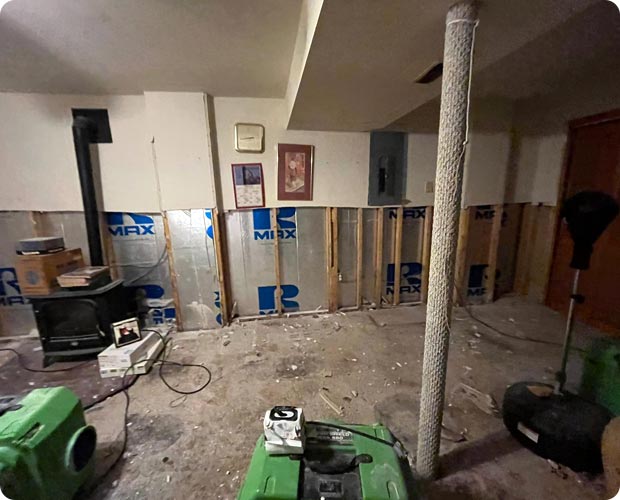
Mold remediation is not mold treatment, mold encapsulation, or surface cleaning — it is the physical removal of mold-contaminated materials following a written protocol prepared by a licensed mold assessor. The IICRC S520 Standard for Professional Mold Remediation defines three condition levels and specifies the response required for each: Condition 1 (normal), Condition 2 (settled spores without active growth), and Condition 3 (actual mold growth requiring full remediation).
Proper remediation starts with the moisture source — if the water intrusion is not corrected, mold will return regardless of how thoroughly affected materials are removed. MoldAct's remediation process begins with moisture source verification and correction before any demolition or material removal begins.