Crawl space mold in Yonkers: what to know
Yonkers' housing stock includes extensive pre-war multi-family apartment buildings and single-family homes built into the hillside terrain above the Hudson River, many dating from the 1900s–1950s — these older masonry and brick buildings have foundations and roofing that predate modern waterproofing standards, making basement and top-floor mold common.
The city's Hudson Valley climate brings four distinct seasons with humid summers and cold, snowy winters — freeze-thaw cycles and ice dam formation on older roofs are a recurring source of attic and wall-cavity moisture that becomes mold once the thaw sets in.
Yonkers' aging municipal water infrastructure, much of it installed in the early-to-mid 20th century, means main breaks and slow service-line leaks are more frequent than in newer municipalities, often saturating basement framing in multi-family buildings before a leak is reported.
Mold conditions in Yonkers
Common mold types in this area: Cladosporium (dominant outdoor species, elevated indoors from basement moisture); Penicillium/Aspergillus (older apartment basements and plaster walls); Stachybotrys chartarum (basement framing with chronic seepage or main-break moisture); Chaetomium (water-damaged plaster and drywall from roof or ice-dam leaks).
We serve Hudson River Museum, Philipse Manor Hall State Historic Site, Untermyer Park and Gardens, Empire City Casino at Yonkers Raceway, Yonkers waterfront on the Hudson River and the wider Yonkers area across ZIP codes 10710, 10701, 10703, 10704, 10705.
Signs you need crawl space mold
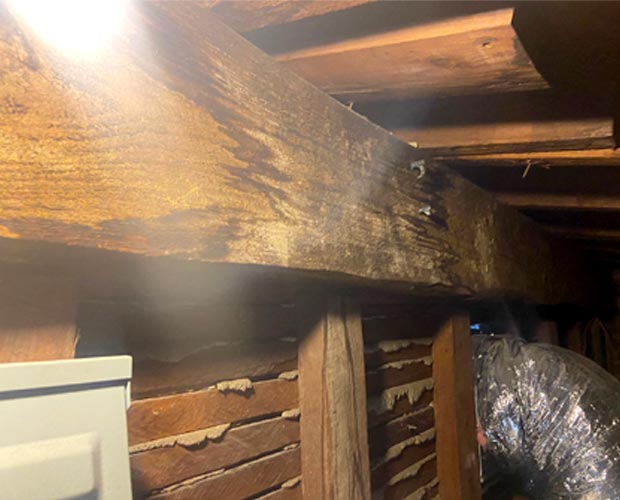
- Dark staining or fuzzy growth on floor joists or subfloor decking visible through the crawl-space access
- Musty odour rising from floor areas or floor registers
- Soft spots or springiness in floors above the crawl space
- Increased allergy or respiratory symptoms for ground-floor occupants
- Evidence of standing water, saturated soil, or moisture-damaged insulation in the crawl space
- Rust on metal fasteners, HVAC components, or pipes in the crawl space
How we handle crawl space mold in Yonkers
Crawl spaces are among the most neglected areas in residential construction and among the most common locations for extensive mold growth. Ground moisture vapour rises from unprotected soil, condenses on the cooler wood framing above, and creates the persistently humid environment that Cladosporium, Penicillium, Aspergillus, and Stachybotrys require to grow. In warm climates like Miami, humid outdoor air entering through vents creates the same problem.
Crawl space mold on floor joists and subfloor decking is particularly serious because it directly contacts the structural components that support the living areas above. Mold-colonised wood also experiences fungal decay (wood rot) over time, which can compromise structural integrity. Early remediation protects both air quality and structure.