Black mold removal in Yonkers: what to know
Yonkers' housing stock includes extensive pre-war multi-family apartment buildings and single-family homes built into the hillside terrain above the Hudson River, many dating from the 1900s–1950s — these older masonry and brick buildings have foundations and roofing that predate modern waterproofing standards, making basement and top-floor mold common.
The city's Hudson Valley climate brings four distinct seasons with humid summers and cold, snowy winters — freeze-thaw cycles and ice dam formation on older roofs are a recurring source of attic and wall-cavity moisture that becomes mold once the thaw sets in.
Yonkers' aging municipal water infrastructure, much of it installed in the early-to-mid 20th century, means main breaks and slow service-line leaks are more frequent than in newer municipalities, often saturating basement framing in multi-family buildings before a leak is reported.
Mold conditions in Yonkers
Common mold types in this area: Cladosporium (dominant outdoor species, elevated indoors from basement moisture); Penicillium/Aspergillus (older apartment basements and plaster walls); Stachybotrys chartarum (basement framing with chronic seepage or main-break moisture); Chaetomium (water-damaged plaster and drywall from roof or ice-dam leaks).
We serve Hudson River Museum, Philipse Manor Hall State Historic Site, Untermyer Park and Gardens, Empire City Casino at Yonkers Raceway, Yonkers waterfront on the Hudson River and the wider Yonkers area across ZIP codes 10710, 10701, 10703, 10704, 10705.
Signs you need black mold removal
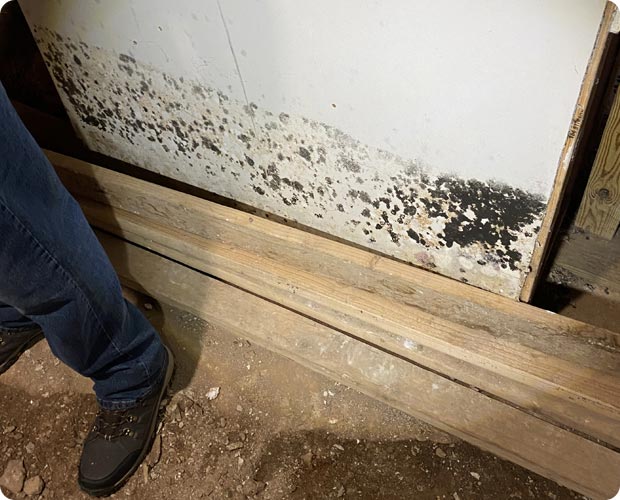
- Dark green, black, or greenish-black colonies on drywall, wood, or ceiling tiles
- Mold with a slimy or wet-looking surface texture (unlike dry, powdery Cladosporium)
- Musty or damp earthy odour in a basement, bathroom, or behind walls
- Mold growth in areas with a history of prolonged water exposure or chronic leaks
- Laboratory results identifying Stachybotrys on air or surface samples
- Health symptoms improving when leaving the property and returning when inside
How we handle black mold removal in Yonkers
Stachybotrys chartarum — commonly called black mold — is a dark-green to black mold species that grows on cellulose-rich materials (drywall paper, wood, ceiling tiles) that have been wet for an extended period, typically more than 48–72 hours. It is one of the species most associated with toxic mold exposure, though any mold at elevated indoor concentrations poses a health risk.
Because Stachybotrys spores are heavy and sticky, they do not disperse as readily as Cladosporium or Penicillium — which means air sampling alone may miss an active Stachybotrys colony. A licensed mold assessor will collect surface samples (tape-lift or swab) from any dark, slimy, or visually distinctive mold growth and send them to an AIHA laboratory for species confirmation.