Clearance testing in McKinney: what to know
McKinney is one of the fastest-growing Dallas-Fort Worth suburbs, with housing stock ranging from 1990s subdivisions to new-build developments — newer construction still commonly shows HVAC condensate and window-flashing mold issues from builder-grade installation.
North Texas' expansive clay soil shrinks and swells with moisture changes, a common cause of foundation cracks that let groundwater migrate into slab-on-grade homes and drive mold behind baseboards and drywall.
McKinney's hot, humid subtropical summers push air conditioning systems hard for months at a time — oversized or poorly maintained AC units can under-dehumidify a home even while cooling it, a frequently overlooked mold driver.
Mold conditions in McKinney
Common mold types in this area: Aspergillus/Penicillium (HVAC systems and slab-leak moisture migration); Cladosporium (exterior surfaces and ambient outdoor background); Stachybotrys chartarum (chronic under-slab or foundation-crack moisture); Chaetomium (water-damaged drywall from slab leaks).
We serve Historic Downtown McKinney Square, Towne Lake Recreation Area, Erwin Park, The Grand at Craig Ranch, McKinney Performing Arts Center and the wider McKinney area across ZIP codes 75069, 75070, 75071, 75072.
Signs you need clearance testing
- Remediation has been completed and containment is still in place
- The written protocol specifies clearance testing as a completion requirement
- A real estate transaction requires documented proof of successful remediation
- An insurance claim requires certified clearance documentation
- The remediator has offered to perform their own clearance (this should be declined)
- A previous clearance test failed and re-clearance is required after additional work
How we handle clearance testing in McKinney
Clearance testing is the final step of any IICRC S520-compliant mold remediation and the critical quality control measure that confirms the work was done correctly. The clearance test must be performed by an independent licensed mold assessor — the company or individual that performed the remediation cannot perform their own clearance test. This independence is mandated by the NYS 2015 Mold Law and is best practice in all markets.
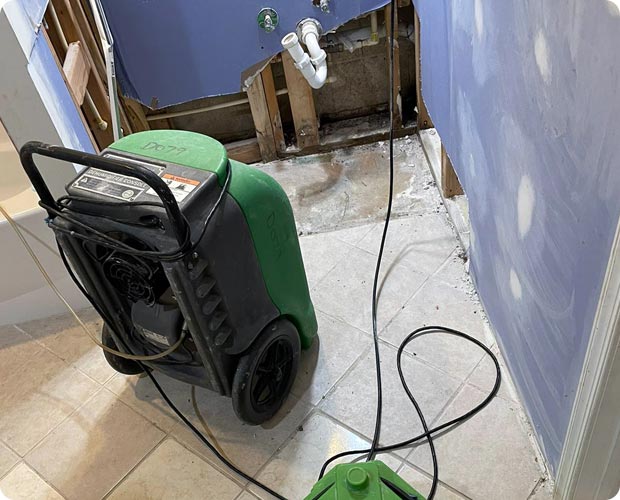
The timing and conditions of clearance testing are specified in the written remediation protocol. Standard protocol requires that containment remains fully in place when samples are collected, that the HEPA-filtered negative air machine has been running for at least 4 hours before sampling, and that an outdoor control sample is collected simultaneously with indoor samples.