Clearance testing in Washington: what to know
Washington DC's rowhouse stock — much of it built between 1900 and 1940 in neighbourhoods like Shaw, LeDroit Park, and Logan Circle — sits on unreinforced masonry foundations with no modern waterproofing membrane, so basement and English-basement mold is common in the older housing stock.
The city's humid subtropical climate produces hot, muggy summers with relative humidity regularly above 65–70% from June through September, and DC's aging combined sewer system means heavy summer storms can cause backups that introduce Category 3 water into basements.
Many downtown DC commercial and mixed-use buildings run centralised HVAC systems serving multiple floors — a single coil or drain-pan failure can distribute moisture and mold spores across several units or offices before it's noticed.
Mold conditions in Washington
Common mold types in this area: Cladosporium (dominant outdoor species, elevated indoors from basement moisture); Penicillium/Aspergillus (rowhouse basements and HVAC-served office space); Stachybotrys chartarum (basement framing with chronic seepage or sewer backup); Chaetomium (water-damaged drywall and plaster).
We serve The National Mall, U.S. Capitol, The White House, Smithsonian National Museum of Natural History, Dupont Circle and the wider Washington area across ZIP codes 20005, 20001, 20009, 20036, 20037.
Signs you need clearance testing
- Remediation has been completed and containment is still in place
- The written protocol specifies clearance testing as a completion requirement
- A real estate transaction requires documented proof of successful remediation
- An insurance claim requires certified clearance documentation
- The remediator has offered to perform their own clearance (this should be declined)
- A previous clearance test failed and re-clearance is required after additional work
How we handle clearance testing in Washington
Clearance testing is the final step of any IICRC S520-compliant mold remediation and the critical quality control measure that confirms the work was done correctly. The clearance test must be performed by an independent licensed mold assessor — the company or individual that performed the remediation cannot perform their own clearance test. This independence is mandated by the NYS 2015 Mold Law and is best practice in all markets.
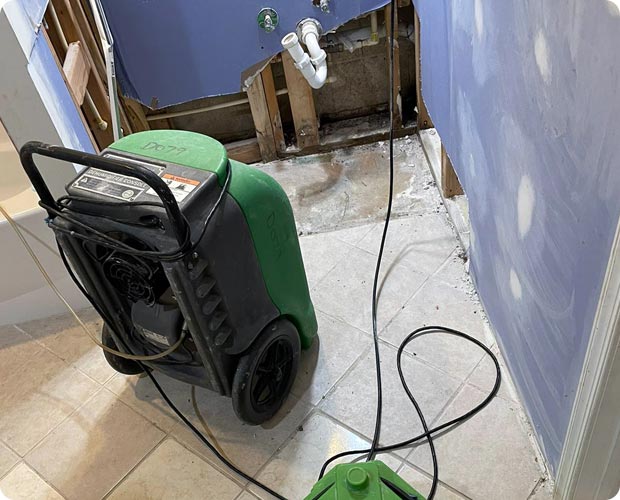
The timing and conditions of clearance testing are specified in the written remediation protocol. Standard protocol requires that containment remains fully in place when samples are collected, that the HEPA-filtered negative air machine has been running for at least 4 hours before sampling, and that an outdoor control sample is collected simultaneously with indoor samples.