Clearance testing in Boca Raton: what to know
Boca Raton's housing stock is predominantly CBS (concrete block and stucco) construction from the 1960s through 1990s, much of it built along canals and the Intracoastal Waterway — stucco cracking and failed pool-deck and window flashing are common moisture entry points that drive interior mold.
The city's subtropical climate delivers near-daily afternoon thunderstorms from May through October and year-round humidity above 70%, so any HVAC condensate line or drain-pan failure produces visible mold growth within days rather than weeks.
As a hurricane-exposed coastal city, Boca Raton properties that sustained storm damage from Irma (2017) or subsequent storms and were not fully dried and inspected can carry hidden mold in wall cavities and attic framing.
Mold conditions in Boca Raton
Common mold types in this area: Aspergillus/Penicillium (HVAC condensate and interior humidity-driven growth); Cladosporium (exterior stucco and ambient outdoor background); Stachybotrys chartarum (post-storm or chronic HVAC leak wall cavities); Curvularia (tropical species common to South Florida).
We serve Mizner Park, Boca Raton Museum of Art, Florida Atlantic University, Red Reef Park, Royal Palm Place and the wider Boca Raton area across ZIP codes 33431, 33432, 33433, 33434, 33486.
Signs you need clearance testing
- Remediation has been completed and containment is still in place
- The written protocol specifies clearance testing as a completion requirement
- A real estate transaction requires documented proof of successful remediation
- An insurance claim requires certified clearance documentation
- The remediator has offered to perform their own clearance (this should be declined)
- A previous clearance test failed and re-clearance is required after additional work
How we handle clearance testing in Boca Raton
Clearance testing is the final step of any IICRC S520-compliant mold remediation and the critical quality control measure that confirms the work was done correctly. The clearance test must be performed by an independent licensed mold assessor — the company or individual that performed the remediation cannot perform their own clearance test. This independence is mandated by the NYS 2015 Mold Law and is best practice in all markets.
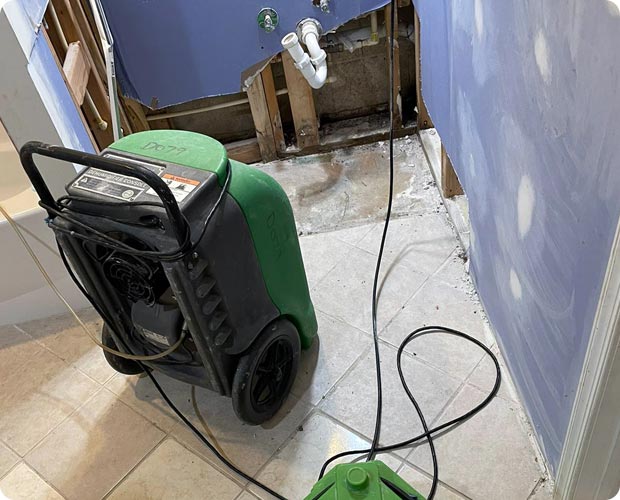
The timing and conditions of clearance testing are specified in the written remediation protocol. Standard protocol requires that containment remains fully in place when samples are collected, that the HEPA-filtered negative air machine has been running for at least 4 hours before sampling, and that an outdoor control sample is collected simultaneously with indoor samples.