Mold remediation in Elizabeth: what to know
Elizabeth has a dense stock of two- and three-family homes from the 1920s–1940s with masonry foundations, shared walls, and limited ventilation — ideal conditions for basement and lower-floor mold.
The waterfront industrial area of Elizabeth was significantly affected by Hurricane Sandy storm surge — commercial and residential properties in the port area have documented post-Sandy mold histories.
Mold conditions in Elizabeth
Common mold types in this area: Cladosporium (masonry basement walls); Stachybotrys (storm-surge-affected framing); Aspergillus (multi-family basement common areas).
We serve Elizabeth Port Authority Marine Terminal, Warinanco Park, St. Elizabeth Church, New Jersey Performing Arts Center (Newark, nearby) and the wider Elizabeth area across ZIP codes 07201, 07202, 07206, 07208.
Signs you need mold remediation
- Visible mold growth larger than 10 square feet (Level II or III scope)
- Mold in HVAC systems, ductwork, or air handlers
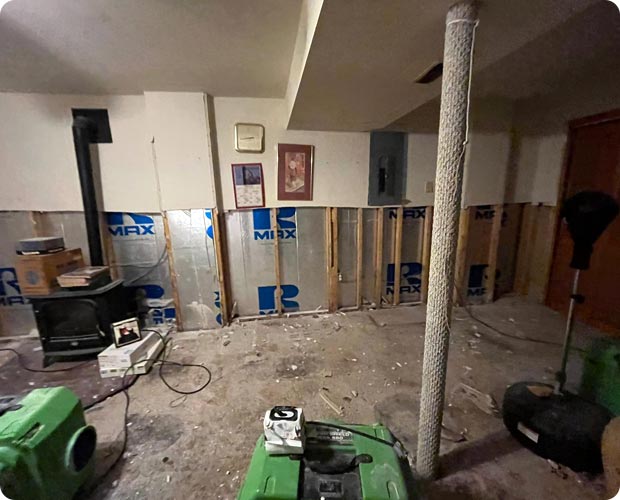
- Mold on structural framing (joists, studs, subfloor) in basement or crawl space
- Black mold (Stachybotrys) confirmed by laboratory testing
- Mold behind walls or under flooring discovered during renovation
- Recurring surface mold that returns within weeks of cleaning
- Musty odour that persists after visible mold is cleaned
How we handle mold remediation in Elizabeth
Mold remediation is not mold treatment, mold encapsulation, or surface cleaning — it is the physical removal of mold-contaminated materials following a written protocol prepared by a licensed mold assessor. The IICRC S520 Standard for Professional Mold Remediation defines three condition levels and specifies the response required for each: Condition 1 (normal), Condition 2 (settled spores without active growth), and Condition 3 (actual mold growth requiring full remediation).
Proper remediation starts with the moisture source — if the water intrusion is not corrected, mold will return regardless of how thoroughly affected materials are removed. MoldAct's remediation process begins with moisture source verification and correction before any demolition or material removal begins.