Mold inspection in Roland Park: what to know
Roland Park is one of Baltimore's earliest planned suburbs, with large detached homes from the 1890s–1920s on heavily wooded lots — organic leaf litter accumulates against foundations, increasing moisture infiltration and mold risk.
Many Roland Park homes have original slate roofs and aging copper gutters — gutter failures and roof penetration leaks are common moisture sources for attic and wall mold.
Mold conditions in Roland Park
Common mold types in this area: Cladosporium (attic and exterior wood); Aspergillus (basement and crawl spaces); Stachybotrys (attic from ice dam or gutter failure).
We serve Roland Park Country School, Stony Run Trail, Roland Park Shopping Center, Gilman School (nearby) and the wider Roland Park area across ZIP codes 21210.
Signs you need mold inspection
- Visible dark or discoloured patches on walls, ceilings, or floors
- Persistent musty or earthy odour in one or more rooms
- Unexplained respiratory symptoms or allergic reactions indoors
- Water stains, efflorescence, or swollen drywall
- Recent water intrusion — roof leak, burst pipe, or flooding
- Condensation on windows or cold surfaces in humid conditions
- Peeling paint or wallpaper that is not explained by age
How we handle mold inspection in Roland Park
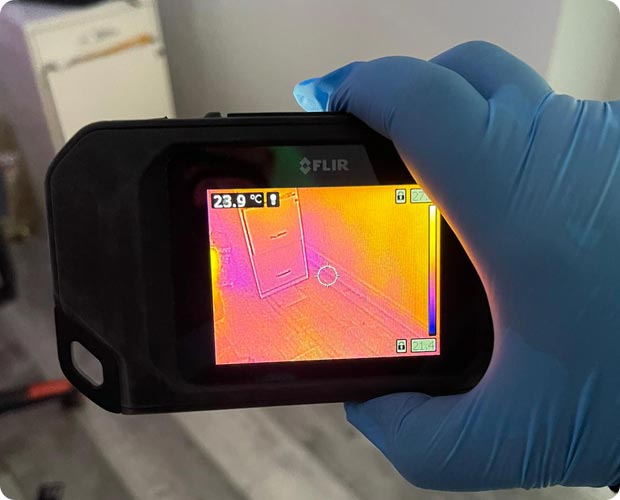
A mold inspection is the essential first step before any remediation work. A licensed mold assessor conducts a systematic visual survey of the property, uses moisture meters and thermal imaging to locate hidden wet areas, and collects air or surface samples where mold is suspected or confirmed. Samples are sent to an accredited AIHA laboratory for species identification and spore-count analysis.
Under the NYS 2015 Mold Law and analogous Florida and New Jersey regulations, the mold assessor and the mold remediator must be separate companies. This independence protects homeowners from inflated scopes and conflicts of interest. MoldAct works exclusively with licensed, independent assessors in each market.