Mold inspection in Bowie: what to know
Bowie's tract housing from the 1960s–1980s boom years has aging block foundations and original HVAC equipment that is a frequent source of condensate overflow and attic moisture problems.
Many Bowie basements were finished by previous owners using materials (vinyl flooring over concrete, drywall to the slab) that trap moisture and support mold growth when the slab weeps during wet seasons.
Mold conditions in Bowie
Common mold types in this area: Cladosporium (finished basement walls); Penicillium (carpet and subfloor in finished basements); Aspergillus (HVAC attic installations).
We serve Allen Pond Park, Bowie Town Center, Prince George's Stadium, Bowie State University and the wider Bowie area across ZIP codes 20715, 20716, 20720, 20721.
Signs you need mold inspection
- Visible dark or discoloured patches on walls, ceilings, or floors
- Persistent musty or earthy odour in one or more rooms
- Unexplained respiratory symptoms or allergic reactions indoors
- Water stains, efflorescence, or swollen drywall
- Recent water intrusion — roof leak, burst pipe, or flooding
- Condensation on windows or cold surfaces in humid conditions
- Peeling paint or wallpaper that is not explained by age
How we handle mold inspection in Bowie
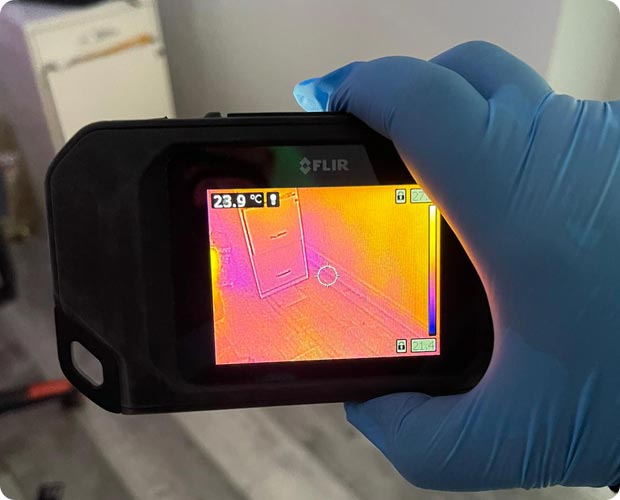
A mold inspection is the essential first step before any remediation work. A licensed mold assessor conducts a systematic visual survey of the property, uses moisture meters and thermal imaging to locate hidden wet areas, and collects air or surface samples where mold is suspected or confirmed. Samples are sent to an accredited AIHA laboratory for species identification and spore-count analysis.
Under the NYS 2015 Mold Law and analogous Florida and New Jersey regulations, the mold assessor and the mold remediator must be separate companies. This independence protects homeowners from inflated scopes and conflicts of interest. MoldAct works exclusively with licensed, independent assessors in each market.