Bathroom mold removal in Chevy Chase: what to know
Chevy Chase's pre-war detached homes — primarily 1920s–1940s colonial and Tudor revival construction — have full basements with original block or brick foundation walls that exhibit moisture infiltration through mortar joints and wall cracks during wet seasons.
The neighbourhood's older plaster-on-wood-lath wall construction retains moisture more aggressively than modern drywall, and plaster that has been penetrated by a slow plumbing leak can support hidden mold for years before symptoms appear.
Chevy Chase has a strong historic preservation community — mold remediation in this neighbourhood requires assessors familiar with historic construction materials to avoid damaging irreplaceable plaster, tile, and wood finishes.
Mold conditions in Chevy Chase
Common mold types in this area: Penicillium (historic plaster walls and ceilings with moisture infiltration); Cladosporium (basement block walls and wood trim); Stachybotrys (basement sill plates with chronic foundation moisture); Chaetomium (water-damaged plaster in older homes with deferred roof maintenance).
We serve Chevy Chase Club, Chevy Chase Lake, Friendship Heights (nearby), Brookside Gardens, Meadowbrook Local Park and the wider Chevy Chase area across ZIP codes 20815.
Signs you need bathroom mold removal
- Black or greenish mould visible on grout lines, caulk, or tile surfaces
- Soft or spongy drywall at the base of the shower or bath surround
- Bubbling, cracked, or loose tiles — often indicating moisture migration behind
- Persistent musty odour in the bathroom after surface cleaning
- Staining on the ceiling below a bathroom (mold in subfloor or hidden leak)
- Visible mold at the base of toilet, vanity, or around plumbing penetrations
How we handle bathroom mold removal in Chevy Chase
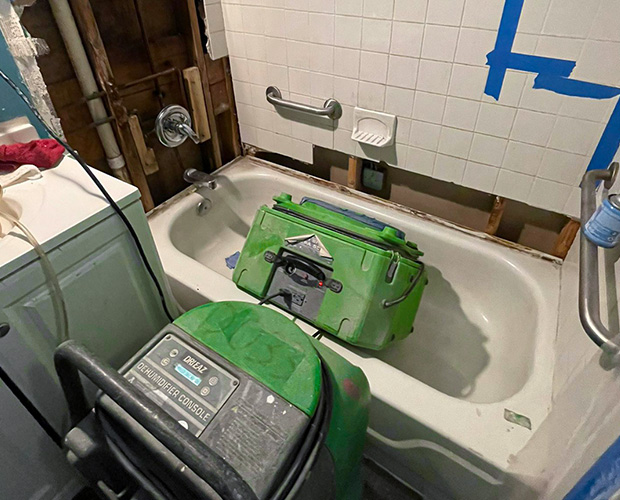
Bathroom mold is extremely common and ranges from minor surface growth on grout and caulk to serious structural mold growth behind tile, in wall cavities, and under subfloor decking. The difference matters enormously: surface mold on a non-porous substrate (glazed tile, sealed grout) can often be professionally cleaned without demolition; mold inside the wall cavity requires opening the wall, removing affected drywall and insulation, and following IICRC S520 protocol.
The most common bathroom moisture sources are: inadequate or non-functioning exhaust ventilation, grout and caulk failures that allow water into wall cavities, overflow from showers or tubs, and chronic toilet base leaks. In all cases, the moisture source must be corrected before any mold treatment — retiling over wet, contaminated drywall simply delays the problem.