Basement mold removal in Potomac: what to know
Potomac's high-value single-family homes — many on heavily wooded 1–5 acre lots — face constant organic debris accumulation on roofs and in gutters. Leaf and branch debris traps moisture on roofing substrates, accelerating shingle degradation and creating attic mold entry points that go undetected for years.
Large Potomac properties frequently have pool houses, guest suites over garages, and finished basement home offices — each a separate potential mold location requiring independent inspection. Deferred maintenance on accessory structures is a common mold source.
The combination of clay soil (poor drainage), heavy tree canopy (high ambient humidity under the canopy), and older home construction (1970s–1990s) creates a high-mold-risk environment where inspection at time of purchase and after any water event is essential.
Mold conditions in Potomac
Common mold types in this area: Cladosporium (attic — dominant in roof-deck and rafter mold from gutter overflow); Stachybotrys (attic framing from chronic slow roof leaks in older Potomac estates); Aspergillus/Penicillium (pool house and accessory building humidity); Chaetomium (water-damaged drywall in basements and lower-level home offices).
We serve Potomac Village, C&O Canal National Historical Park, Cabin John Regional Park, The Potomac School (nearby), Avenel Golf Course and the wider Potomac area across ZIP codes 20854.
Signs you need basement mold removal
- Visible mold on concrete block walls, wood framing, or stored cardboard
- Musty odour in the basement that worsens in summer
- Efflorescence (white mineral deposits) on concrete walls indicating moisture movement
- Rusting of metal fasteners, pipes, or stored items
- Condensation on cold surfaces during humid weather
- Staining or dark discolouration on wood floor joists above the basement
- Buckling or swelling of basement floor tiles or concrete paint
How we handle basement mold removal in Potomac
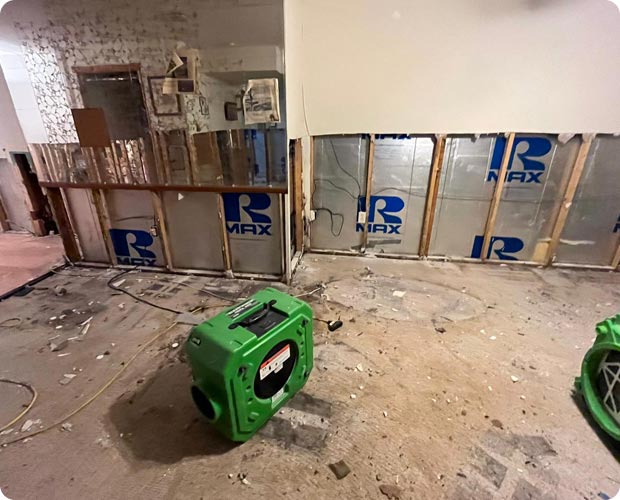
Basements are the most common location for mold growth in residential properties across Baltimore, New Jersey, and coastal markets. The combination of below-grade construction, proximity to groundwater, temperature differentials that produce condensation, and limited ventilation creates ideal conditions for mold on wood framing, drywall, insulation, and stored items.
Unlike above-grade mold, basement mold almost always has a chronic moisture source — foundation wall seepage, floor slab moisture, sump pump failure, condensation on cold surfaces, or inadequate waterproofing. Remediating the mold without permanently correcting the moisture source guarantees recurrence, often within one season. The remediation scope must include a moisture correction plan.