
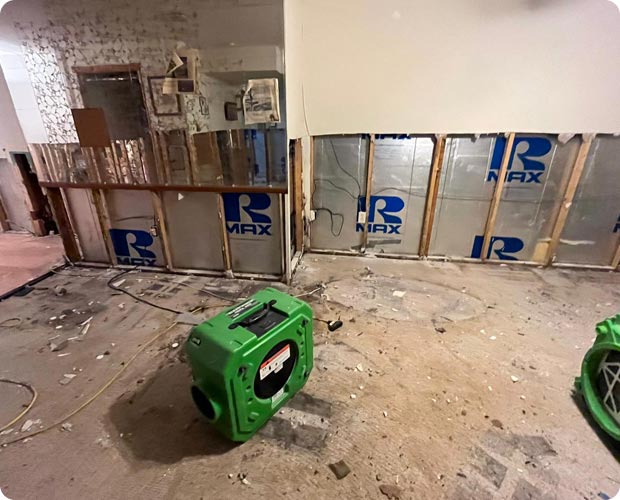
Basement mold removal in Miami Gardens: what to know
Miami Gardens has a large stock of single-family homes from the 1960s–1980s where original HVAC systems have been replaced multiple times but duct systems retain the original flex duct — aging flex duct with fibreglass liner is a known mold substrate.
The community's proximity to NW Miami-Dade Canal gives western sections elevated groundwater levels after heavy rain events.
Mold conditions in Miami Gardens
Common mold types in this area: Aspergillus/Penicillium (flex duct liner and HVAC components); Cladosporium (interior surfaces with humidity excursions); Stachybotrys (ground moisture in slab-on-grade homes near canal).
We serve Hard Rock Stadium, Florida Memorial University, Calder Casino, Carol City Park and the wider Miami Gardens area across ZIP codes 33055, 33056.
Signs you need basement mold removal
- Visible mold on concrete block walls, wood framing, or stored cardboard
- Musty odour in the basement that worsens in summer
- Efflorescence (white mineral deposits) on concrete walls indicating moisture movement
- Rusting of metal fasteners, pipes, or stored items
- Condensation on cold surfaces during humid weather
- Staining or dark discolouration on wood floor joists above the basement
- Buckling or swelling of basement floor tiles or concrete paint
How we handle basement mold removal in Miami Gardens
Basements are the most common location for mold growth in residential properties across Baltimore, New Jersey, and coastal markets. The combination of below-grade construction, proximity to groundwater, temperature differentials that produce condensation, and limited ventilation creates ideal conditions for mold on wood framing, drywall, insulation, and stored items.
Unlike above-grade mold, basement mold almost always has a chronic moisture source — foundation wall seepage, floor slab moisture, sump pump failure, condensation on cold surfaces, or inadequate waterproofing. Remediating the mold without permanently correcting the moisture source guarantees recurrence, often within one season. The remediation scope must include a moisture correction plan.