Basement mold removal in Miami Beach: what to know
Miami Beach's subtropical climate produces year-round humidity of 70–90%, with summer months consistently above 80% RH — any building envelope failure, HVAC malfunction, or flooding event produces mold within 48–72 hours in this environment.
Many Miami Beach buildings were constructed in the 1930s–1950s Art Deco era using materials (hollow-core concrete block, plaster over metal lath) that are particularly vulnerable to salt moisture infiltration and mold growth behind interior finishes.
Hurricane Irma (2017) caused significant roofing and window damage across Miami Beach — properties where temporary repairs were not followed by thorough drying and inspection developed structural mold in wall cavities.
Mold conditions in Miami Beach
Common mold types in this area: Cladosporium (exterior surfaces and outdoor air, dominant background species); Penicillium/Aspergillus (interior humidity-driven growth); Stachybotrys (post-hurricane or chronic HVAC leak); Curvularia and Helminthosporium (tropical species unique to South Florida).
We serve Ocean Drive Art Deco Historic District, Lincoln Road Mall, Pérez Art Museum Miami (nearby mainland), Lummus Park, Bass Museum of Art and the wider Miami Beach area across ZIP codes 33139, 33140, 33141.
Signs you need basement mold removal
- Visible mold on concrete block walls, wood framing, or stored cardboard
- Musty odour in the basement that worsens in summer
- Efflorescence (white mineral deposits) on concrete walls indicating moisture movement
- Rusting of metal fasteners, pipes, or stored items
- Condensation on cold surfaces during humid weather
- Staining or dark discolouration on wood floor joists above the basement
- Buckling or swelling of basement floor tiles or concrete paint
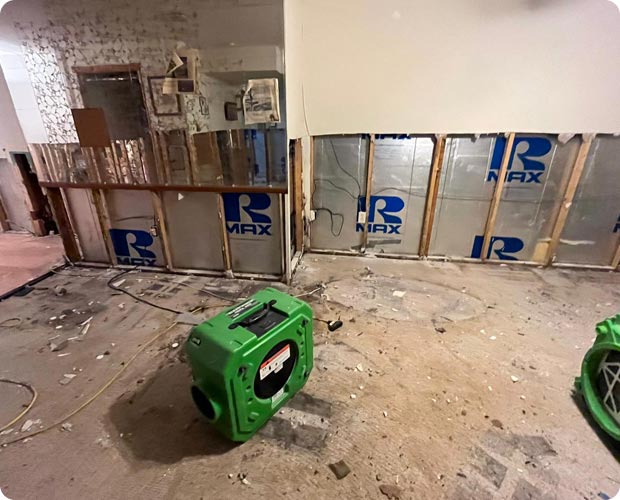
How we handle basement mold removal in Miami Beach
Basements are the most common location for mold growth in residential properties across Baltimore, New Jersey, and coastal markets. The combination of below-grade construction, proximity to groundwater, temperature differentials that produce condensation, and limited ventilation creates ideal conditions for mold on wood framing, drywall, insulation, and stored items.
Unlike above-grade mold, basement mold almost always has a chronic moisture source — foundation wall seepage, floor slab moisture, sump pump failure, condensation on cold surfaces, or inadequate waterproofing. Remediating the mold without permanently correcting the moisture source guarantees recurrence, often within one season. The remediation scope must include a moisture correction plan.