
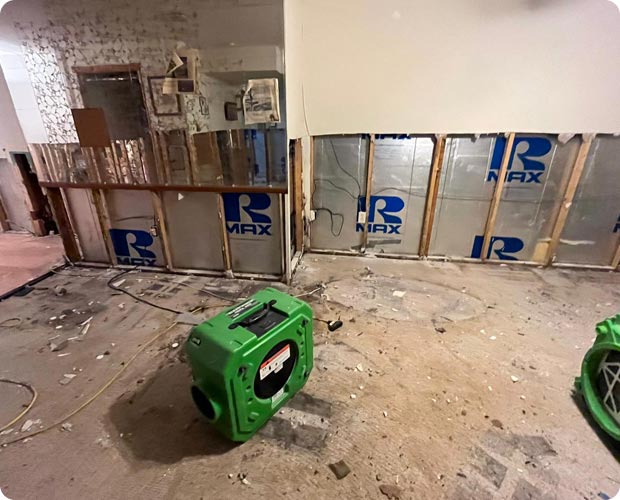
Basement mold removal in Hackensack: what to know
Hackensack's position on the Hackensack River floodplain puts many lower-elevation properties at risk of basement flooding during significant storm events — particularly in the South Ward and areas near the river.
The city's significant stock of 1940s–1960s garden apartments and mid-rise residential buildings has HVAC systems that are at end of service life, with condensate issues driving mold in mechanical rooms and adjacent units.
Mold conditions in Hackensack
Common mold types in this area: Cladosporium (garden apartment basement units); Aspergillus (aging HVAC systems); Penicillium (floodplain basement storage).
We serve Main Street Hackensack, Bergen County Courthouse, Anderson Street Station, Hackensack River and the wider Hackensack area across ZIP codes 07601, 07602.
Signs you need basement mold removal
- Visible mold on concrete block walls, wood framing, or stored cardboard
- Musty odour in the basement that worsens in summer
- Efflorescence (white mineral deposits) on concrete walls indicating moisture movement
- Rusting of metal fasteners, pipes, or stored items
- Condensation on cold surfaces during humid weather
- Staining or dark discolouration on wood floor joists above the basement
- Buckling or swelling of basement floor tiles or concrete paint
How we handle basement mold removal in Hackensack
Basements are the most common location for mold growth in residential properties across Baltimore, New Jersey, and coastal markets. The combination of below-grade construction, proximity to groundwater, temperature differentials that produce condensation, and limited ventilation creates ideal conditions for mold on wood framing, drywall, insulation, and stored items.
Unlike above-grade mold, basement mold almost always has a chronic moisture source — foundation wall seepage, floor slab moisture, sump pump failure, condensation on cold surfaces, or inadequate waterproofing. Remediating the mold without permanently correcting the moisture source guarantees recurrence, often within one season. The remediation scope must include a moisture correction plan.