Skip to content
Licensed mold remediation — call to schedule
ES
MoldAct logo MoldAct IICRC S520 Certified Mold Remediation
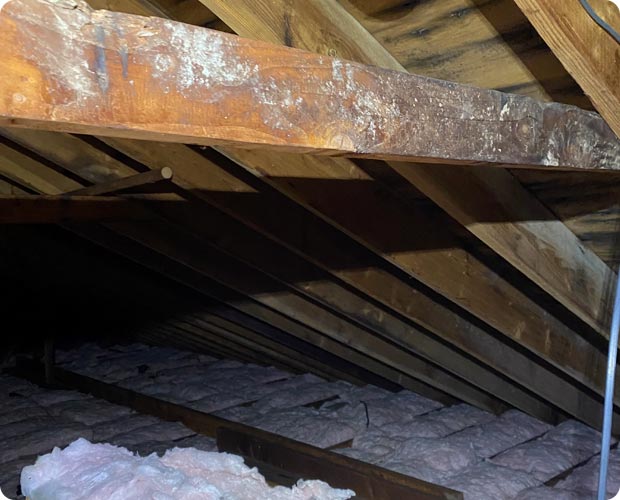
Mold growth spreading across attic roof sheathing and rafters

Attic Mold Removal in Hoboken, NJ

Attic mold grows on roof sheathing and rafters when inadequate ventilation traps moisture from bathroom exhaust fans, kitchen vents, or ice dam leaks — remediation treats the wood surfaces and corrects the ventilation deficiency or moisture source to prevent recurrence.

Get Your Free Mold Inspection

Or call now: (877) 660-0430

Attic mold removal in Hoboken: what to know

Hoboken was severely flooded during Hurricane Sandy — approximately 80% of the city was inundated, and many basements and first floors sustained significant water damage. Properties remediated in 2012–2013 should be reassessed if symptoms recur.

Hoboken's flat topography and high water table mean that basements in this city are among the most prone to groundwater infiltration in New Jersey — sump pump systems are essential and their failure a primary cause of water damage and mold.

The city's 19th-century brownstones and early 20th-century brick buildings have the same structural moisture challenges as similar Manhattan building stock.

Mold conditions in Hoboken

Common mold types in this area: Stachybotrys (post-Sandy basement framing); Cladosporium (brownstone cellar and garden apartment); Aspergillus/Penicillium (basement laundry and utility areas).

We serve Sinatra Park, Hoboken Terminal, Washington Street, Elysian Park and the wider Hoboken area across ZIP codes 07030.

Signs you need attic mold removal

  • Dark staining or fuzzy growth on roof sheathing (OSB or plywood) visible from the attic hatch
  • Black streaking on rafters from ridge down toward eaves
  • Frost or condensation on roof sheathing in winter months (visible in cold climates)
  • Bathroom exhaust fans that make noise but do not appear to vent outside
  • Musty smell in second-floor rooms or directly below the attic
  • Ice dams on the roof in winter in northern markets

How we handle attic mold removal in Hoboken

Attic mold is almost always a ventilation or exhaust routing problem. The most common causes are: bathroom exhaust fans that terminate in the attic rather than through the roof, kitchen range hoods routed into the attic, ice dams on the roof causing melt water to enter the attic in winter, and ridge/soffit ventilation that is blocked or insufficient. In each case, moisture accumulates on the cold roof sheathing and rafters, producing widespread mold growth — often Cladosporium but also Penicillium and, in wet enough conditions, Stachybotrys.

Attic mold is frequently discovered during a home inspection prior to sale, and it is one of the most common deal-killer items in real estate transactions. It is also one of the more straightforward mold remediations when caught early — the wood surfaces are non-porous enough to be treatable without full replacement in most cases, and access is relatively straightforward.

Simple, transparent process

Our Hoboken Attic Mold Removal Process

  1. 1

    Attic assessment and cause identification

    The assessor enters the attic to document mold growth, identify exhaust termination points, assess ridge/soffit ventilation, and check for signs of water intrusion. Moisture readings are taken on sheathing and rafters.

  2. 2

    Protocol and source correction plan

    The written protocol specifies mold remediation scope and required ventilation corrections. Exhaust fan rerouting to the exterior and ridge vent installation may be specified as prerequisites to remediation — the moisture source must be eliminated first.

  3. 3

    HEPA vacuuming and surface treatment

    Roof sheathing and rafters are HEPA-vacuumed, then treated with an EPA-registered antifungal. For light surface mold (Condition 2) on dry sheathing, wire brushing and antifungal treatment is typically sufficient. For Condition 3 (active Stachybotrys or heavily colonised sheathing), affected panels may need replacement.

  4. 4

    Media blasting (where specified)

    Dry ice blasting or soda blasting can clean large areas of attic sheathing efficiently and is specified in some protocols. It removes mold and surface staining from the wood without introducing additional moisture.

  5. 5

    Clearance testing and documentation

    Independent air samples are collected after treatment and clearance of the attic. A post-remediation report is provided — essential for real estate transactions where the buyer requires documentation of remediation completion.

Attic Mold Removal in Hoboken — FAQs

Do you provide attic mold removal in Hoboken?

Yes — MoldAct provides attic mold removal throughout Hoboken, NJ (ZIP codes: 07030) and surrounding New Jersey areas. Call us to book the earliest available appointment.

Can attic mold be treated without replacing the sheathing?

In most cases, yes — if the wood is structurally sound (not decayed) and the mold is surface growth (Cladosporium, Penicillium), antifungal treatment after HEPA cleaning is sufficient. Sheathing replacement is required when the wood is decayed, delaminated (OSB), or when the protocol specifies it due to Stachybotrys.

How does attic mold affect a home sale?

Attic mold must be disclosed in most US states and is typically flagged by the buyer's home inspector. A professional remediation with post-remediation clearance documentation from a licensed assessor is usually sufficient to satisfy buyer requirements, though some lenders or buyers may require a clearance inspection period.

How long does attic mold remediation take?

A typical attic remediation (HEPA vacuuming and antifungal treatment) takes 1–2 days. If exhaust fan rerouting is required, add 0.5–1 day. If sheathing replacement is specified, add 1–3 days depending on the area affected.

Attic Mold Removal in Hoboken — book today

Licensed, insured mold remediation contractors. Call to schedule.

Call Now Free Quote