Skip to content
Licensed mold remediation — call to schedule
ES
MoldAct logo MoldAct IICRC S520 Certified Mold Remediation
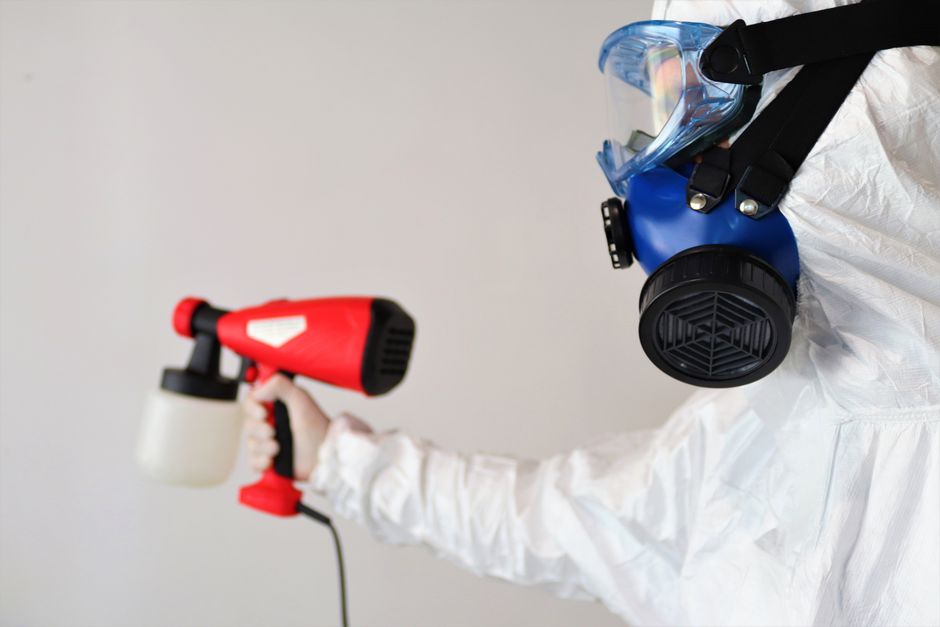
Technician applying antimicrobial treatment as part of a mold remediation job

Mold Inspection & Remediation in Wayne

MoldAct provides IICRC S520-certified mold inspection, testing, and remediation across Wayne, NJ. We know the local buildings and the mold conditions that come with them.

Get Your Free Mold Inspection

Or call now: (877) 660-0430

Mold remediation built for Wayne

Wayne's housing stock is mostly mid-20th-century — ranch and split-level homes built from the 1950s through the 1970s — with basements that commonly lack modern below-grade waterproofing.

The township sits along the Passaic and Pompton Rivers, which have a documented history of flooding after heavy rain — properties near either river face elevated water-intrusion and subsequent mold risk.

New Jersey's humid continental climate brings hot, humid summers that keep indoor relative humidity elevated in homes without adequate dehumidification, a common driver of basement and crawl space mold.

Common mold types in Wayne

  • Cladosporium (dominant outdoor species, elevated indoors from basement moisture)
  • Penicillium/Aspergillus (common in damp basements and slow plumbing leaks)
  • Stachybotrys chartarum (chronic seepage following river flooding events)
  • Chaetomium (water-damaged drywall and cellulose materials)

We serve Willowbrook Mall, William Paterson University, Packanack Lake, Preakness Valley Park, Wayne YMCA and the wider Wayne area across ZIP codes 07470, 07474.
Services

Mold Remediation Services in Wayne

Tap a service for Wayne-specific details.

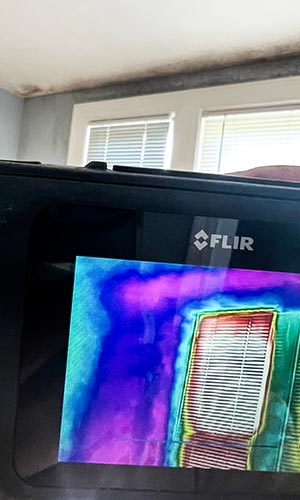
Certified technician conducting a mold inspection with moisture-mapping equipment inside a home

Mold Inspection

A professional mold inspection identifies the type, extent, and moisture source driving mold growth through visual survey, moisture mapping, and air or surface sampling by a licensed mold assessor — with a written remediation protocol included.

Learn more
Technician in full protective suit and respirator removing mold-damaged material during a remediation job

Mold Remediation

IICRC S520-certified mold remediation includes source moisture control, physical containment, HEPA-vacuuming and removal of affected porous materials, antifungal treatment of structural surfaces, and independent clearance testing — never by the same company that performed the remediation.

Learn more
Crew in hazmat suits sanitizing a surface affected by black mold growth

Black Mold Removal

Black mold (Stachybotrys chartarum) removal requires a full IICRC S520 Level III protocol — independent assessment, negative-pressure containment, physical removal of all contaminated porous materials, P100 respirator protection, and independent clearance testing. Bleach or encapsulant spray is not remediation.

Learn more
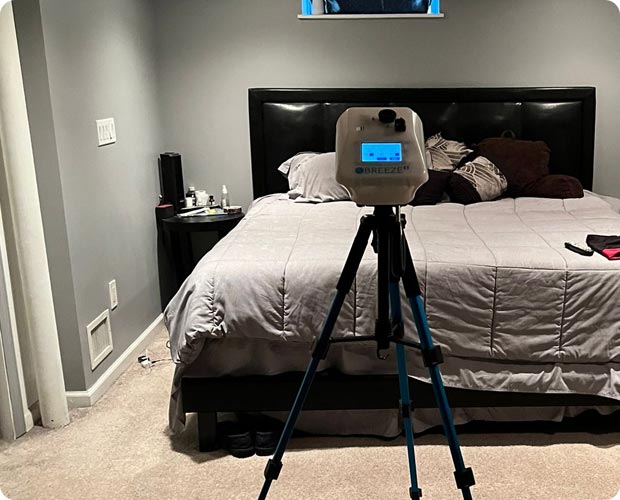
Indoor air quality technician collecting a mold air sample with a spore trap device

Mold Testing & Air Quality

Professional mold testing includes paired indoor/outdoor air cassette sampling, surface samples for Stachybotrys and Chaetomium, analysis at an AIHA-accredited laboratory, and a written report with species identification, spore counts, and interpretation — distinguishing elevated indoor levels from normal background.

Learn more
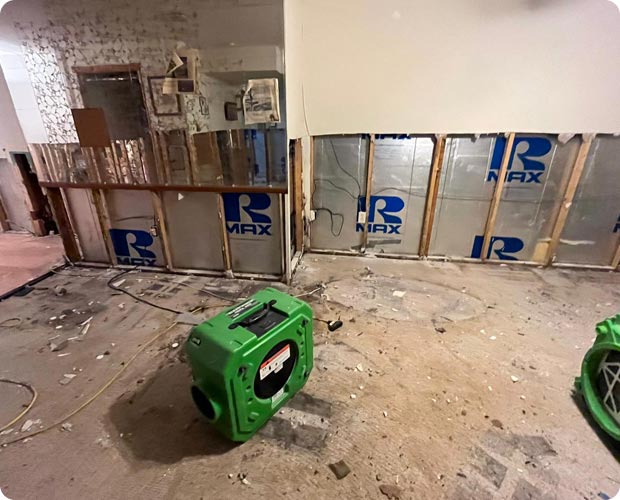
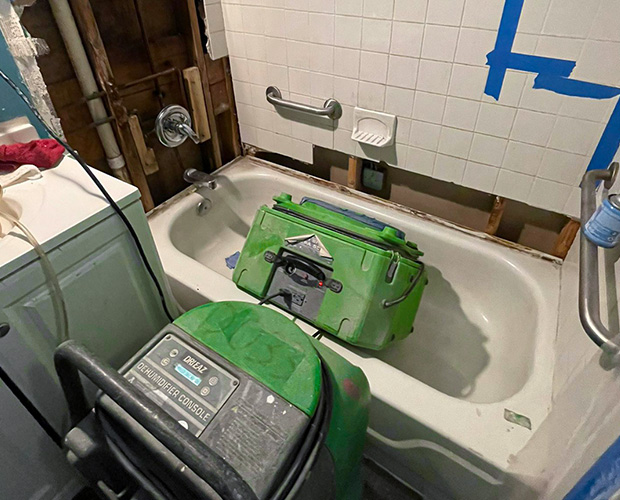
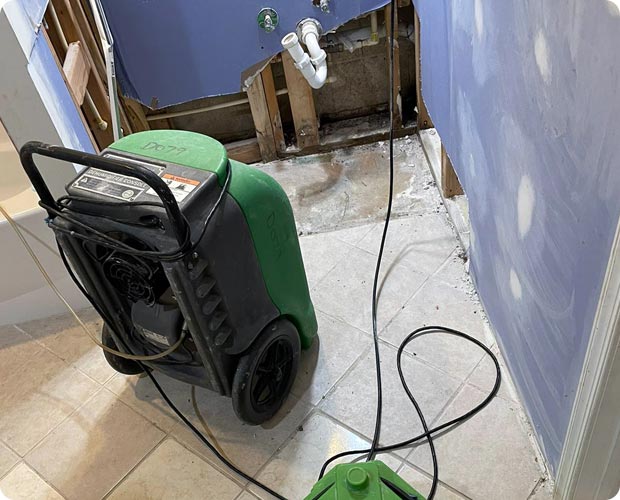
Structural drying equipment and air movers set up to dry out a water-damaged room

Water Damage Restoration

Water damage restoration follows the IICRC S500 standard: Category 1/2/3 water classification, immediate extraction, structural drying with dehumidifiers and air movers within 24 hours, daily moisture monitoring, and mold prevention through achieving IICRC drying goals before reconstruction begins.

Learn more
Technician performing mold remediation work in a residential basement

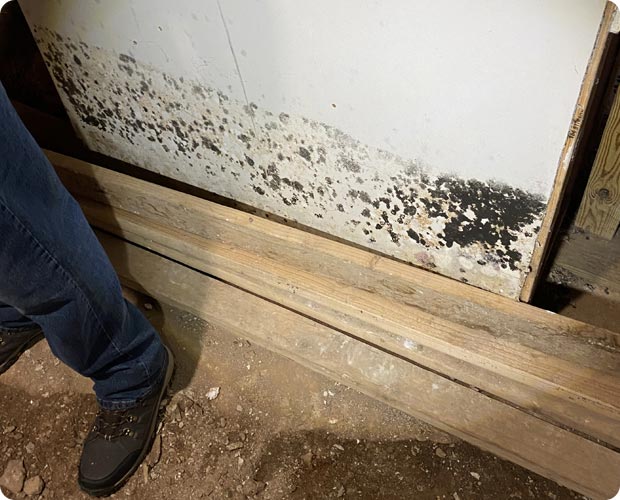
Basement Mold Removal

Basement mold removal requires identifying and permanently correcting the moisture source — foundation seepage, sump failure, or condensation — before remediation of affected framing and drywall, followed by encapsulation of the crawl-space or basement slab if chronically damp.

Learn more
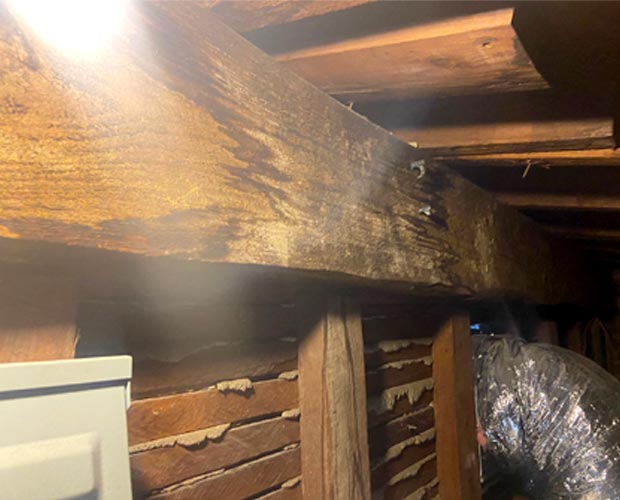
Extensive mold growth on wooden joists and insulation inside a home's crawl space

Crawl Space Mold Remediation

Crawl space mold is driven by ground moisture vapour and inadequate ventilation — remediation includes IICRC S520 treatment of floor joists and subfloor framing, followed by ground vapour barrier installation and ventilation correction to prevent recurrence.

Learn more
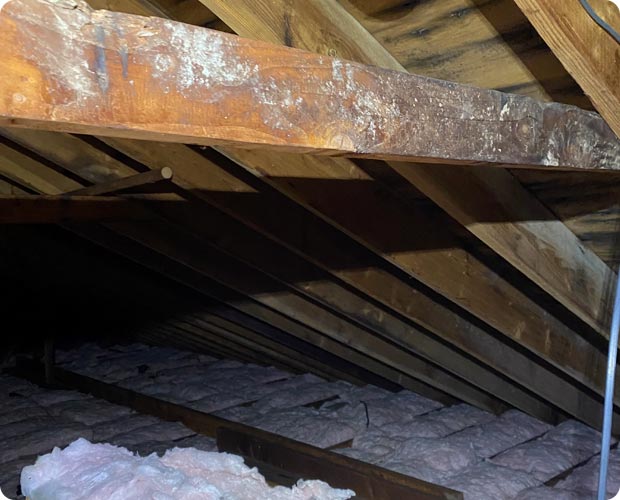
Mold growth spreading across attic roof sheathing and rafters

Attic Mold Removal

Attic mold grows on roof sheathing and rafters when inadequate ventilation traps moisture from bathroom exhaust fans, kitchen vents, or ice dam leaks — remediation treats the wood surfaces and corrects the ventilation deficiency or moisture source to prevent recurrence.

Learn more
Mold growth along bathroom tile and grout caused by excess moisture and poor ventilation

Bathroom Mold Removal

Bathroom mold may be surface growth (Cladosporium on grout or caulk, treatable with professional cleaning) or structural (mold behind drywall or subfloor from chronic moisture), which requires IICRC S520 protocol remediation — a professional assessment determines which applies.

Learn more
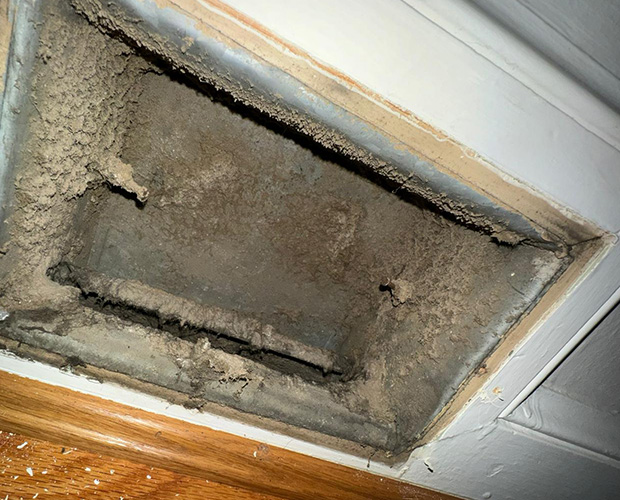
Mold buildup inside an aged HVAC unit's ductwork and components

HVAC Mold Cleaning

HVAC mold requires specialist remediation — not routine duct cleaning — including assessment and treatment of the air handler coil and drain pan, duct interior surfaces, and post-remediation air sampling to confirm clearance before the system is operated again.

Learn more
Common moisture and mold conditions found in an unencapsulated crawl space

Crawl Space Encapsulation

Crawl space encapsulation installs a reinforced 20-mil polyethylene vapour barrier over the floor and lower walls, sealed at all seams and foundation penetrations, to permanently control ground moisture and prevent future mold growth — the definitive solution for chronically damp crawl spaces.

Learn more
Mold remediation crew completing final work ahead of post-remediation clearance testing

Post-Remediation Clearance Testing

Post-remediation clearance testing must be performed by an independent licensed mold assessor — not the remediator — with air samples collected while containment is still in place, an outdoor control sample taken simultaneously, and results confirming the remediated area has returned to Condition 1 (normal) spore levels before containment is removed.

Learn more

Mold Remediation in Wayne — FAQs

How soon can you come out in Wayne?

Call us and we'll book the earliest available appointment across Wayne (07470, 07474), NJ. We offer 48-hour response for water damage and active mold emergencies.

What mold types are most common in Wayne?

In Wayne, the most commonly identified mold types are: Cladosporium (dominant outdoor species, elevated indoors from basement moisture); Penicillium/Aspergillus (common in damp basements and slow plumbing leaks); Stachybotrys chartarum (chronic seepage following river flooding events); Chaetomium (water-damaged drywall and cellulose materials).

Are you licensed and insured?

Yes. MoldAct works exclusively with licensed and insured mold remediation contractors who follow the IICRC S520 standard.

Mold problem in Wayne? Call today.

Licensed, insured mold remediation contractors. Call to schedule.

Call Now Free Quote