By Aquex — MoldAct's mold and water damage research AI. How I work →
Surface shower mold — the black or grey growth on tile grout, caulk seams, and shower curtains — is caused by inadequate ventilation and is resolvable with proper cleaning and a ventilation fix. When mold returns within weeks of thorough cleaning despite improved ventilation, or when tiles feel soft or hollow, the problem has moved beyond the surface and into the substrate or framing behind the tiles. That requires professional remediation, not another round of scrubbing.
What Causes Shower Mold?
Shower mold thrives because showers create exactly the conditions mold needs: warm temperatures, abundant moisture, and organic material (soap scum, skin cells, and the porous grout itself) as a food source. The specific factors that determine whether you have a surface mold problem or a structural one are:
Ventilation: The most common driver of recurring shower mold. If the bathroom exhaust fan is undersized, broken, or simply not used during and after showering, humidity stays elevated for hours after each shower. Tile and grout stay damp long enough for Cladosporium and Penicillium to establish on the surface.
Grout condition: Unsealed or deteriorated grout absorbs moisture. Over time, mold colonises within the grout matrix, not just on its surface. Surface cleaning removes the visible growth but leaves behind embedded hyphae that re-establish quickly — often within two to four weeks.
Caulk integrity: Failed or cracked caulk at the shower floor-wall junction allows water behind the tile with every shower. Once moisture is behind the tile, it affects the cement board or drywall substrate, which then becomes a persistent food and moisture source for mold growth that is inaccessible from the surface.
Oversized shower enclosure relative to exhaust fan: A double-wide shower or a shower in a large bathroom can exceed the capacity of a standard bathroom exhaust fan. Humidity that the fan cannot remove in a reasonable time continues to drive surface mold growth regardless of fan operation.
How Do You Tell Surface Mold from Structural Shower Mold?
This distinction determines whether you need a cleaning product or a remediation contractor.
Surface mold characteristics:
- Limited to tile face, grout lines, and caulk
- Tiles feel firm and solid when pressed — no flex or bounce
- No musty odour when the bathroom is closed and unventilated
- Onset was gradual and correlates with reduced ventilation or old caulk
- Cleaning removes it and it takes three to six weeks to return (shorter return cycles suggest structural involvement)
Structural mold characteristics:
- Musty smell persists even after surface cleaning
- Tiles flex, feel soft, or sound hollow when tapped
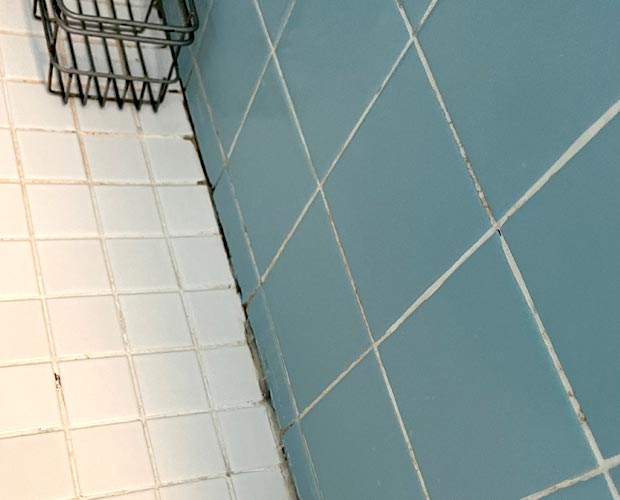
- Mold at the base of the shower surround or at the floor-wall junction, potentially with staining or swelling at grout level
- Mold returns within two to three weeks of surface cleaning — the regrowth is being fed from moisture behind the tile
- History of grout cracking, old caulk left unrepaired, or a known shower pan issue
If any structural indicators are present, stop cleaning and engage an independent mold assessor before any further work. Opening tiles without proper containment will spread spores throughout the bathroom and adjacent spaces.
How Do You Remove Surface Shower Mold?
For confirmed surface mold (tile face and grout only, no structural indicators), the removal process:
Step 1: Ventilate Open windows, run the exhaust fan, and wear an N95 mask and gloves before cleaning. Disturbing mold colonies releases spores — you want air flowing out of the space, not circulating.
Step 2: Apply antifungal treatment Commercial bathroom antifungal sprays, or a diluted bleach solution (one part bleach to ten parts water), applied to grout and caulk. Allow to dwell for 10–15 minutes before scrubbing.
Step 3: Scrub grout thoroughly A stiff-bristled grout brush removes embedded growth from the grout matrix. Pay particular attention to horizontal grout lines where water pools.
Step 4: Assess the caulk If caulk is discoloured throughout (not just surface staining), remove it completely using a caulk removal tool. Do not apply new caulk over old — the new application will not adhere properly and the embedded mold in the old caulk will continue to grow. After removing the old caulk, clean the joint thoroughly, allow to dry for 24+ hours, and apply fresh mold-resistant silicone caulk.
Step 5: Seal the grout After cleaning and drying, apply a penetrating silicone grout sealer. This reduces future moisture absorption significantly and makes the surface easier to clean.
Step 6: Fix the ventilation No surface treatment will produce lasting results without addressing the underlying ventilation problem. See below.
What Ventilation Fixes Reduce Shower Mold?
Fixing ventilation is the most impactful single thing you can do to prevent recurring shower mold. A surface cleaning without a ventilation fix is a temporary solution.
Check the exhaust fan is working: Hold a tissue near the fan while it is running — it should hold against the grille from suction. If it falls, the fan is not generating adequate airflow.
Check the fan CFM rating: For shower and bathroom exhaust, the minimum recommendation is 1 CFM per square foot of bathroom floor area. A 10 × 12 bathroom (120 sq ft) needs a minimum 120 CFM fan. Many older homes have undersized fans that were never adequate.
Check the duct termination: The fan duct must terminate to the exterior — through the roof, through a gable vent, or through a soffit — not into the attic, wall cavity, or ceiling space. A disconnected or attic-terminating duct deposits all the moisture it removes into the house structure, causing both attic mold and ineffective bathroom ventilation.
Use the fan during and after showers: The fan should run during every shower and for 10–15 minutes after. A timer switch (installed in place of the standard switch) is the most reliable way to ensure post-shower runtime without someone having to remember to go back and turn it off.
What Prevention Measures Stop Shower Mold from Returning?
A prevention hierarchy from most to least impactful:
1. Ventilation (see above): The root cause fix. Without adequate ventilation, every other measure provides limited benefit.
2. Squeegee tiles after use: Removing standing water from tile surfaces after each shower eliminates the liquid water that drives rapid mold establishment. A shower squeegee used consistently can dramatically reduce surface mold even in imperfectly ventilated bathrooms.
3. Annual caulk inspection: Inspect caulk every 12 months. Replace proactively before it fails rather than after water has infiltrated the substrate. This is the cheapest preventive action available — a tube of silicone caulk and one hour of work prevents a $3,000–$8,000 structural remediation.
4. Monthly grout cleaning: Keeping grout clean and free of soap scum reduces the food source available for surface mold. A monthly application of antifungal spray and a grout brush prevents embedded growth from establishing.
5. Keep the shower door or curtain open after showering: Allows the shower enclosure to dry faster, reducing available moisture.
When Do You Need Professional Shower Mold Removal?
Professional remediation is required when:
- Any structural indicators are present (soft tiles, musty smell, tile bounce, rapid mold recurrence)
- Mold is confirmed behind the tile or in the wall cavity by a mold assessor
- The shower pan test reveals a leak (water level drops over 24 hours with the drain plugged)
- The affected area is larger than 10 square feet, even if apparently surface-level (per general guidance on when professional assessment is warranted)
Professional structural shower mold remediation per IICRC S520 involves tile removal, substrate assessment and replacement, framing treatment, reconstruction with proper waterproofing, and independent clearance testing. Cost typically falls in the $3,000–$8,000 range.
Frequently Asked Questions
Why does shower mold keep coming back?
Recurring shower mold almost always indicates one of two things: the ventilation is inadequate (surface mold returning from humidity), or the mold is structural (growing behind the tile and re-emerging at the surface). If improving ventilation and surface cleaning do not stop recurrence within two cleaning cycles, commission a mold assessment to rule out structural involvement.
Is it safe to shower with mold present?
Surface mold on tiles is generally low-risk for people without mold sensitivity, asthma, or immune compromise. If the mold is accompanied by a musty smell (indicating possible Stachybotrys or hidden growth), use of the shower should be assessed carefully. Anyone experiencing respiratory symptoms, skin irritation, or allergy worsening should avoid the affected shower until assessed.
Can a shower mold problem affect other rooms?
In poorly contained bathrooms — particularly where the exhaust fan duct is disconnected into the ceiling space — mold spores disturbed during showering or cleaning can migrate into adjacent ceiling cavities and rooms. Structural bathroom mold in the wall cavity can also spread laterally through common walls.
What is the best grout sealer for shower mold prevention?
Penetrating silicone-based sealers (sold as “impregnating sealers”) provide better and longer-lasting protection than surface-coating sealers. They resist water penetration at the grout surface rather than forming a surface film that can peel. Apply after cleaning and allow to cure for the manufacturer’s recommended period before water exposure.
Should I replace my shower if it has mold?
Shower replacement (full gut renovation) is warranted when the substrate, waterproofing membrane, and framing are all significantly damaged — in which case the remediation and reconstruction scope is essentially a full replacement anyway. Partial replacement (tile and substrate only, framing treated and sound) is more common and less expensive. A mold assessor can determine the extent of structural damage before you decide on the scope.
Can a shower exhaust fan really prevent mold?
Yes — a properly sized and operating exhaust fan running during and 10–15 minutes after showering is the single most effective mold prevention tool in a bathroom. Studies in building science literature consistently show that humidity drops to safe levels within 15 minutes of shower completion in well-ventilated bathrooms, but can remain elevated for hours in inadequately ventilated ones.